Infographic
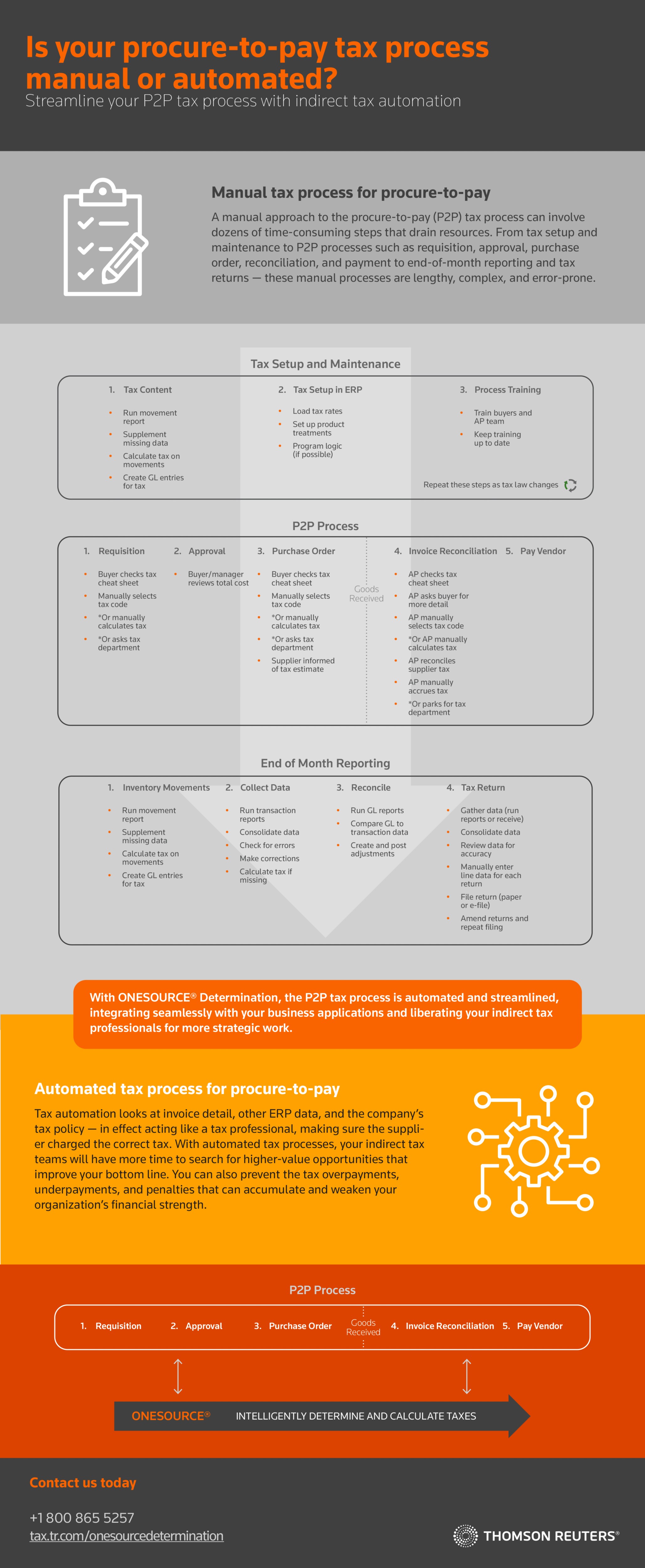
Is your procure-to-pay tax process manual or automated?
Streamline your P2P tax process with indirect tax automation
A manual approach to the procure-to-pay (P2P) tax process can involve dozens of time-consuming steps that drain resources. By contrast, an automated P2P tax process is streamlined and integrates seamlessly with your business applications, liberating your corporate indirect tax team for more strategic work that improves your bottom line. With global tax determination software like ONESOURCE Determination, you can also prevent the tax overpayments, underpayments, and penalties that can accumulate and weaken your organization’s financial strength. Take a look at our infographic to see the differences between a manual P2P tax process and an automated one.

Learn more about ONESOURCE tax determination
Use our global tax determination software to calculate and record sales, use and excise tax, VAT, and GST
Related content
White paper
How manufacturers avoid indirect tax overpayments and underpayments
Protect your operational spend and maximize purchasing power
Article
How procure-to-pay tax solutions help manufacturers avoid tax overpayments
Procure-to-pay (P2P) tax determination helps manufacturers reduce sales and use tax exposure and avoid wasting money through overpaid vendor-charged tax
Webinar
Optimize procurement with intelligent spend and tax accuracy
Overpayments and underpayments, tax penalties, missed early pay incentives, and supplier frustration and conflict – these are just a few examples of how tax impacts business purchasing power.
.png)
