Highlights
- Section 122 tariffs expire July 24, 2026, creating a strategic 150-day planning window.
- 68% of trade professionals now prioritize supply chain resilience over day-to-day optimization.
- Organizations with integrated trade systems can model multiple tariff scenarios for competitive advantage.
The Supreme Court’s February 20 ruling on IEEPA tariffs created a seismic shift in U.S. trade policy, but it also opened an unprecedented strategic window. With Section 122 tariffs now carrying a hard 150-day expiration date of July 24, 2026, trade professionals have a unique opportunity to transform tariff uncertainty into competitive advantage.
Unlike the unpredictable IEEPA regime that could change overnight, Section 122 provides something global trade teams haven’t had in months: a definitive timeline. This isn’t just another compliance challenge — it’s a strategic planning opportunity that forward-thinking trade departments can leverage to demonstrate their value as business partners while competitors remain in reactive mode.
Jump to ↓
The stopgap reality: Why 150 days matters
The operational stabilization playbook for trade departments
The compliance technology advantage
Looking ahead to permanent tariff solutions
The strategy to beat tariff uncertainty

Report
2026 global trade report: Tariff turbulence is elevating strategic role of trade departments
Access report ↗The stopgap reality: Why 150 days matters
Section 122 represents the first time a U.S. president has used this particular tariff authority, and its limitations are significant. The 15% maximum rate and 150-day duration without congressional extension make it fundamentally different from the IEEPA tariffs that dominated 2025.
“What we did see immediately following the ruling, within a few hours was his use of section 122, and this is the first time a president has ever used this particular approach for implementing tariffs,” explains Karen Lobdell, Senior Product Manager for Thomson Reuters ONESOURCE Global Trade. “This is something that can be done very quickly, but there are limitations.”
The administration has already signaled its intention to use this window to implement more permanent solutions. The directive to the U.S. Trade Representative to pursue Section 301 investigations and the likelihood of expanded Section 232 actions means trade teams need to prepare for multiple scenarios simultaneously.
This creates a unique planning environment where trade professionals can model different outcomes and respond to tariff uncertainty with greater precision — whether through Section 122 extension, expiration, or transition to Section 232 or 301 authorities — and position their organizations accordingly.
The operational stabilization playbook for trade departments
The 150-day window provides an ideal opportunity to address the operational chaos that defined 2025. According to Thomson Reuters Institute’s 2026 Global Trade Report, supply chain management has become the top strategic priority for 68% of trade professionals, nearly double the 35% from the previous year. This dramatic shift reflects the urgent need for systemic resilience over day-to-day optimization.
Trade departments should use this period to:
Reassess sourcing patterns strategically. The uniform 10% baseline rate under Section 122, compared to the country-specific IEEPA rates, creates different cost structures that may favor previously disadvantaged suppliers. This is the time to model alternative sourcing scenarios before potential Section 232 or 301 actions create new constraints.
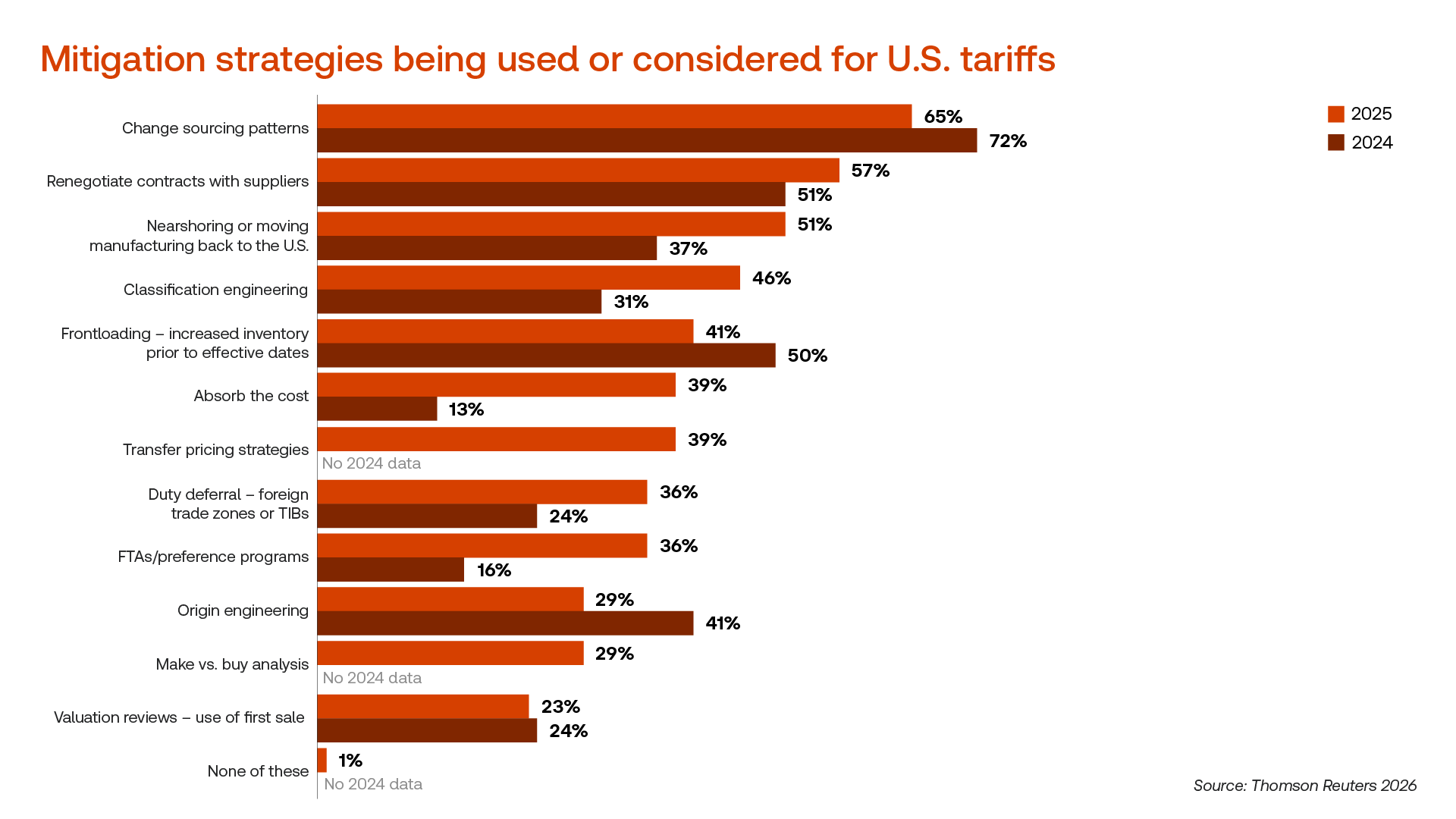
Renegotiate supplier contracts proactively. With 57% of organizations planning to renegotiate contracts with suppliers according to the Global Trade Report, the Section 122 period provides leverage for discussions. Suppliers facing reduced tariff rates compared to IEEPA levels may be more willing to adjust terms.
Implement comprehensive tracking systems. The refund potential from invalidated IEEPA tariffs — estimated at $175 billion industry-wide — requires meticulous documentation. Organizations need systems that can handle the complexity of tracking historical transactions while monitoring current Section 122 compliance.
The compliance technology advantage
In an environment shaped by tariff uncertainty, organizations with sophisticated tracking and modeling capabilities gain a clear advantage. Manual processes simply cannot handle the complexity of managing multiple tariff scenarios while pursuing IEEPA refunds and maintaining Section 122 compliance.
“For those who are using global trade management solutions like ONESOURCE or some other methodology, these tools can absolutely help you track this information and produce reports and analysis that will be much faster than the old methods of creating a spreadsheet,” Lobdell notes. This technological advantage becomes crucial when dealing with hundreds or millions of transactions across multiple tariff regimes.
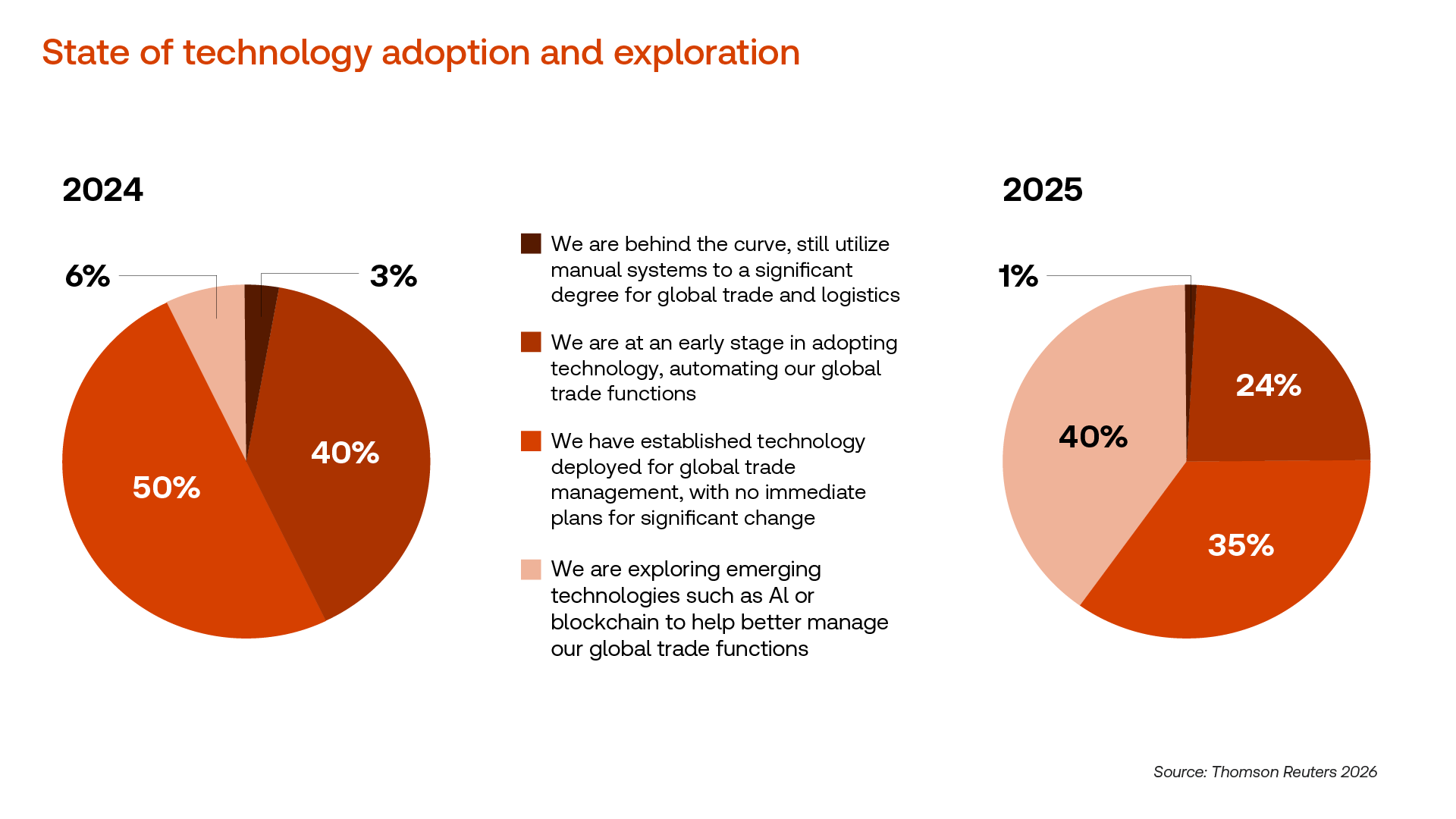
The Global Trade Report reveals that 40% of trade professionals are now exploring AI or blockchain technologies, compared to just 6% in 2024. This dramatic increase reflects the industry’s recognition that traditional approaches cannot handle the current level of complexity and volatility.
Organizations with integrated trade management systems can quickly model the impact of different scenarios:
- What happens if Section 122 expires without replacement?
- How would expanded Section 232 coverage affect specific product lines?
- Which suppliers would be advantaged under potential Section 301 actions?
This scenario planning capability transforms uncertainty from a liability into a strategic asset.
Looking ahead to permanent tariff solutions
The administration’s commitment to maintaining tariff-based trade policy through alternative authorities creates both challenges and opportunities for trade professionals. Section 232 investigations typically involve longer timelines and public comment periods, potentially providing more predictability than the IEEPA regime’s overnight changes.
Section 301 actions, managed by the U.S. Trade Representative, focus on unfair trade practices and include notice and comment periods. While these processes take longer to implement, they also create more durable legal foundations that are less vulnerable to court challenges.
The key insight for trade professionals is that this transition period rewards preparation over reaction. Organizations that use the next 150 days to build comprehensive scenario models, strengthen supplier relationships, and implement robust tracking systems will be positioned to capitalize on whatever permanent solution emerges.
The strategy to beat tariff uncertainty
The Supreme Court’s ruling and the subsequent shift to Section 122 tariffs represent more than a legal or administrative change — they mark a fundamental shift in how trade policy operates. The days of overnight tariff changes may be ending, but the need for strategic agility has never been greater.
Trade professionals who recognize this 150-day window as a strategic planning opportunity, rather than just another compliance burden, will be better equipped to navigate tariff uncertainty and position their organizations for success regardless of what permanent tariff regime emerges. The clock is ticking, but for prepared organizations, time is on their side.
|
|