Advisory services resources for accounting professionals
Clients are looking for guidance that goes beyond tax returns and financial statements. Whether you're providing tax, accounting, financial, or business advice, or exploring how AI can support your work, these resources can help you better serve clients and expand your services.
Why advisory services matter now
Clients want an advisor
Tax professionals say 74% of their clients want a trusted advisor, not just a tax preparer, according to the Thomson Reuters Institute 2026 State of Tax Professionals Report.
Advisory is underpriced
Billing advisory by the hour leaves money on the table, while value-based pricing ties the fee to what the client gains.
Capacity is the limit
Firms can’t grow advisory if their best people are still buried in data entry and return prep.
Financial advisory
- Financial advisory covers tax-informed guidance on estate and inheritance planning, retirement, wealth transfer, and transactions such as mergers and acquisitions.
- Tax and accounting professionals are well placed to lead these conversations because they already see a client's full financial picture through returns and financial statements.
- If your firm doesn't offer this guidance, clients may turn to financial advisors to fill the role.

Inheritance tax strategies: A guide for tax and accounting professionals
Why technically sound inheritance tax plans often fail when emotions run high, and how to build client preparedness that goes beyond the balance sheet.


Tax advisory
- Tax advisory is proactive, year-round planning that helps clients reduce tax liability and prepare for major decisions, rather than reporting what already happened on a return.
- Strong tax advisory relationships start with context: understanding a client's goals, life events, and expectations before recommending strategies.
- Firms scale tax advisory by documenting repeatable processes and training junior staff to deliver strategies, so growth doesn't depend on a few senior partners.

What is tax advisory?
Explore the different types of tax advisory services, how to become a tax advisor, and the skills needed to succeed in the profession.



Accounting advisory
- Accounting advisory uses a client's financial data to guide decisions on cash flow, budgeting, forecasting, and performance, going beyond bookkeeping and financial statement preparation.
- Unlike one-time consulting projects, accounting advisory is usually ongoing, which builds recurring revenue and longer client relationships.
- Automating routine accounting work frees staff time for the analysis and client conversations that clients will pay more for.

Accounting advisory: What you need to know
Explore the benefits of accounting advisory, how it differs from traditional consulting, and what it takes to launch, grow, and monetize an advisory practice.

Accounting consulting: How to become an accounting consultant (and why)

Advisory progress report

How CPA firms can master an AI-powered growth mindset
Business advisory
- Business advisory helps clients make decisions on business strategy, growth, financing, entity structure, and succession.
- Firms that focus on a specific industry or client type can stand out in a crowded market and attract clients who value specialized guidance.
- Many business advisory engagements start with the quick questions clients already ask, and turning those into scoped, priced services is a practical way to grow.

Why accounting firms should become business advisors
Understand how niche business advisory services can help accounting firms stand out in a competitive market, attract ideal clients, and increase profitability.
4 keys to building advisory relationships

How to start offering new advisory services in your firm
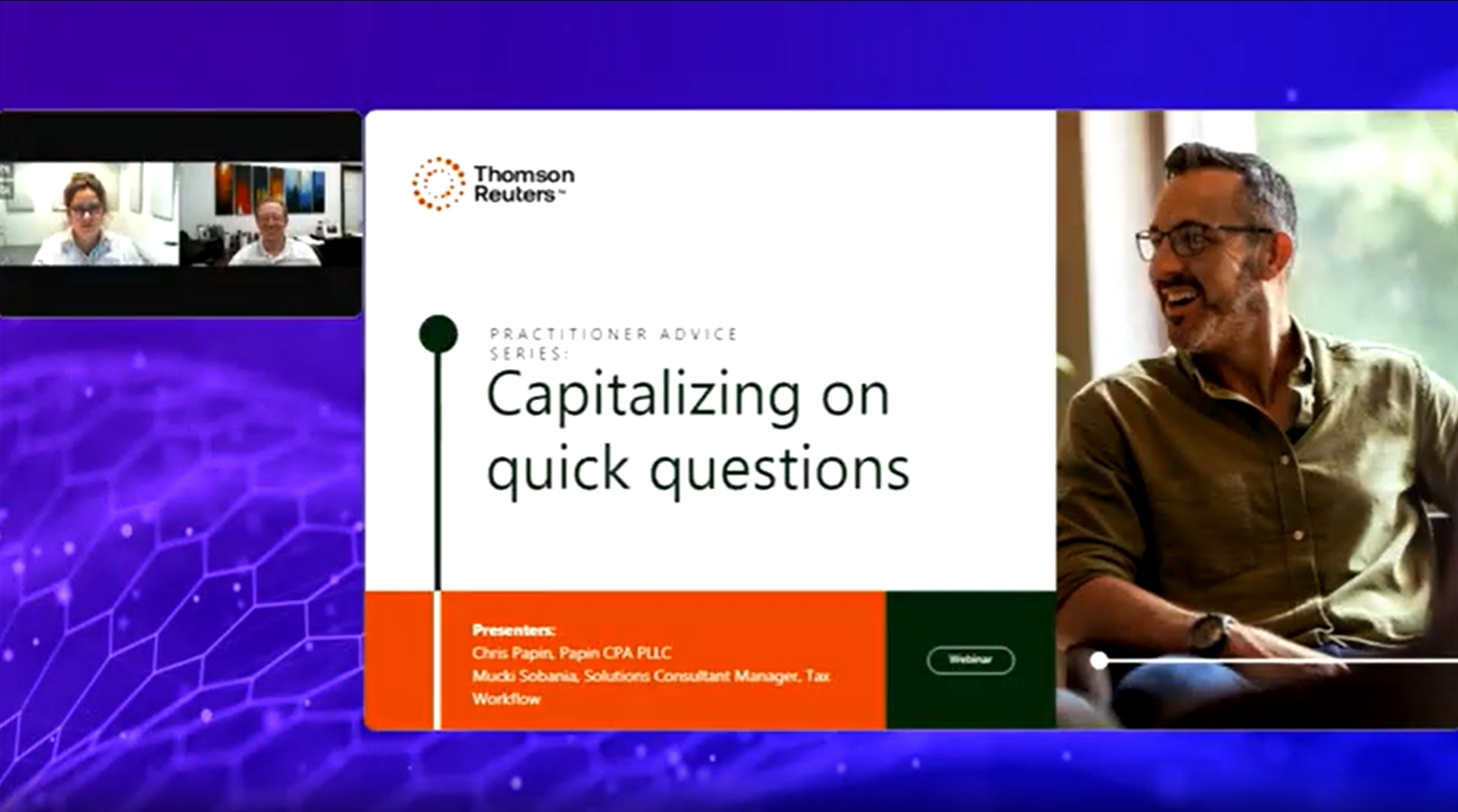
Capitalizing on quick questions
Advisory & AI
- AI can analyze tax returns and client data to identify planning opportunities and rank strategies by relevance and potential impact.
- AI-guided workflows help staff at any experience level deliver consistent advisory work, so firms can expand advisory services without adding headcount.
- AI built for professional advisory work should draw on verified content and keep a professional in the loop to review and approve every recommendation.

How to use AI in tax planning for clients
Firms use AI in tax planning for strategy identification, workflow consistency, and efficient client communication.

Why Ready to Advise is the AI advisory solution accounting firms have been waiting for

From tax returns to revenue: How AI scales advisory without adding staff

How a small CPA firm scaled advisory and accelerated research with CoCounsel and Ready to Advise
Turn tax data into advisory opportunities with Ready to Advise
Set your firm apart with insights powered by Fiduciary-Grade AI™, automated workflows, and expert implementation guidance.
Have questions? Contact a representative
Frequently asked questions
Advisory services are proactive guidance that helps clients make better tax, financial, and business decisions. Compliance work reports on what already happened. Advisory work looks ahead: planning for tax liability, improving cash flow, structuring a business, or preparing for a sale or succession.
For tax and accounting firms, advisory services usually fall into four areas: tax advisory, accounting advisory, business advisory, and financial advisory. Many firms start with one area tied to work they already do for clients, then expand.
Tax compliance is preparing and filing accurate returns based on transactions that have already occurred. Tax advisory is year-round planning that shapes those transactions before they happen, such as timing income and deductions, choosing an entity structure, or planning for a major purchase or sale.
Tax compliance is seasonal and often priced per return. Advisory is ongoing and is more often priced by engagement, fixed fee, or value reflected in the scope and deliverables.
Common services include tax planning and strategy, accounting advisory such as cash flow forecasting, budgeting, and performance reporting, business advisory such as growth, succession, and exit planning, and financial advisory such as estate, inheritance, and retirement planning or support for mergers and acquisitions.
The right mix depends on your client base. A firm with many owner-operated businesses may lead with business and accounting advisory, while a firm focused on high-net-worth individuals may lead with tax and estate planning.
Start with clients you already serve. Review their returns and financial statements for planning opportunities, identify which clients would benefit most, and choose one or two services your team can deliver well. Define the scope, deliverables, and price for each service before you offer it, so advisory conversations don't turn into unbilled extra work.
Then build repeatable processes, including intake questions, analysis templates, and client reports, so more of your staff can deliver the work consistently.
Many firms undervalue advisory work. The Thomson Reuters Institute 2026 State of Tax Professionals Report found advisory margins of 20% to 24%, compared with 28% for individual tax returns. Firms using value-based or fixed-fee pricing for advisory work report margins above 31%.
That said, there’s no single right pricing model. The best fit depends on the clients you serve, the services you offer, and how often the work happens. The most common models are:
- Value-based pricing sets the fee by the value the work delivers to the client, agreed up front, rather than by the hours it takes. For example, a client facing a time-sensitive decision, such as whether to accept an offer for their business, may value fast, focused advice. The firm can agree on a fixed fee up front that reflects that value.
- Fixed-fee pricing sets one price for a defined scope. It suits projects with clear deliverables, such as an estate plan for a high-net-worth family or a succession plan for a business owner.
- Subscription or retainer pricing charges a recurring monthly or quarterly fee for ongoing access. It fits continuous work, such as monthly cash flow forecasting and performance reviews for a small business without a CFO. It’s also a good way to bill for the quick questions clients ask throughout the year.
- Hourly billing is still common, but it tends to undercut advisory margins. It works best for work with an unpredictable scope, such as M&A due diligence on a short timeline.
Many firms combine models. A firm might keep a small business on a monthly accounting advisory retainer and price a one-time tax restructuring project separately. Whatever model you choose, client-ready reports that show the work and its benefits make the fee easier to explain.
Technical tax knowledge is the foundation, but advisory work also depends on asking good questions, listening, and turning tax rules into decisions a client can act on. Advisors need to understand a client's goals, family situation, and business plans, not just their numbers, and explain trade-offs in plain language.
Comfort with technology matters too. As AI tools take on more data analysis and research, advisors can spend more of their time with clients.
A business advisor helps owners make decisions about strategy, growth, financing, entity structure, hiring, and succession. For small businesses without a CFO, an accountant in an advisory role often fills that gap by interpreting financial results and recommending next steps.
Because accountants already work with a client's books and returns, they're well placed to spot problems and opportunities early.
Estate tax planning means arranging how a client’s assets transfer during life and at death so federal and state transfer taxes stay as low as possible. Tax professionals project a client’s estate tax exposure under current law. Starting in 2026, the federal exemption is $15 million per person, or $30 million for a married couple, and assets above it are taxed at 40%. Many states have their own estate or inheritance taxes with lower thresholds.
Advisors then model strategies to reduce that exposure. Common strategies include lifetime gifting, portability elections, bypass trusts, GRATs, dynasty trusts, charitable giving, and succession planning for family businesses. Advisors also prepare the related returns, Form 709 for gifts and Form 706 for estates. Form 706 is also needed to elect portability for a surviving spouse even when no estate tax is due.
No. AI speeds up analysis, research, and document preparation, but client relationships, judgment on trade-offs, and responsibility for recommendations stay with the professional. The benefit for firms is capacity: less time on data work means more time for client conversations and strategy.
It depends on what the AI is built on. General-purpose AI can produce answers that sound right but have no verified source behind them, which is a real risk when advice affects a client's taxes or finances.
AI for professional advisory work should meet a higher standard, what Thomson Reuters calls Fiduciary-Grade AI™. It draws on content verified by subject matter experts, keeps a documented trail, and keeps the final decision with the professional, who reviews and approves recommendations before they reach a client.

