
Senior tax and finance leaders share how clean data, complexity management, and early tax integration drive ERP transformation success.
Highlights
- Tax automation is crucial for successful SAP S/4HANA transitions, preventing errors and inefficiencies.
- Early integration of tax automation, strong data governance, and native SAP integration are key success factors.
- Thomson Reuters offers certified SAP-integrated tax solutions to automate compliance and provide real-time insights.
Corporate tax teams face increasing pressure to modernize their systems while maintaining compliance. As organizations transition to SAP S/4HANA, tax automation becomes a critical component of a successful ERP transformation. Without it, companies risk errors, inefficiencies, and audit exposure.
To explore this challenge, Thomson Reuters hosted a roundtable with senior tax and finance leaders from multinational and Fortune 500 companies. The discussion revealed critical success factors for tax teams during ERP transformation, including clean data migration, managing system complexity, and embedding tax early in the process. We’ll explore key takeaways and actionable insights to help tax leaders automate compliance, strengthen data governance, and maximize ROI.
Jump to ↓
Why tax automation is essential during ERP transformation
Key insights from the SAP S/4HANA tax roundtable
Corporate tax leaders reveal SAP integration best practices
How Thomson Reuters supports tax automation in SAP S/4HANA
Next steps for tax leaders migrating to SAP S/4HANA
Why tax automation is essential during ERP transformation
Migrating to SAP S/4HANA is a complex process that touches every part of the business. Tax determination is often overlooked until late in the project. This leads to costly delays and manual workarounds. Automating tax compliance from the start ensures that tax is embedded into core business processes and avoids last-minute disruptions.
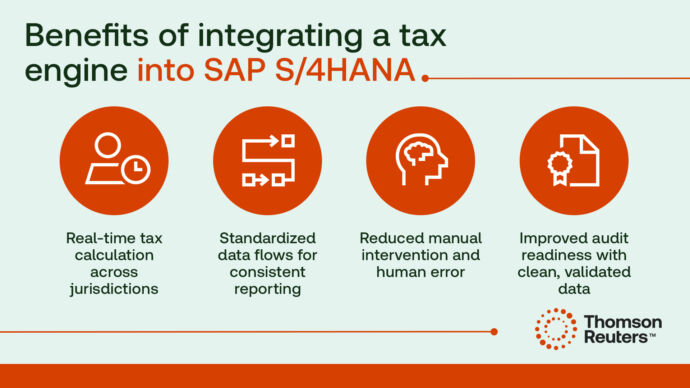
Many organizations underestimate the complexity of indirect tax until they are well into the migration process. One roundtable participant described the challenge of managing tax across 40 separate billing systems, each with its own logic and exemption rules, as a spiderweb of systems. This reinforces the importance of embedding automation early to avoid manual workarounds and reduce risk.
Tax automation is not just a technical upgrade. It is a foundational element that supports ERP success and long-term scalability. Indirect tax automation is more than a compliance upgrade. It is a strategic enabler for transformation.
New mandates like e-invoicing and digital filing add urgency, yet many organizations struggle with prolonged implementations and rising costs. A well-executed automation strategy offers stability, scalability, and reduced total cost of ownership. It streamlines vendor relationships, supports global compliance, and builds a foundation for future growth.
Key insights from the SAP S/4HANA tax roundtable
The roundtable revealed several critical themes that tax leaders should consider when planning their SAP tax integration strategy.
This insight underscores why tax automation must be prioritized early in the ERP transformation journey. Participants shared seven strategies to address this challenge:
- Embed compliance from day one. Tax automation should be part of the ERP roadmap from the start, not an afterthought. Automating tax determination in SAP ensures accuracy and consistency across all transactions, reduces manual workarounds, and minimizes compliance risk.
- Establish strong data governance. Several leaders emphasized that clean, validated data aligned with SAP structures is essential. But it’s not just about data quality. Using consistent naming conventions, ownership protocols, and governance frameworks is critical for scalability and AI readiness.
- Integrate tax natively into SAP. Embedding a tax engine with standardized data flows and APIs allows tax calculations to run within core SAP processes. This minimizes disruption and ensures tax is treated as a native ERP function.
- Build scalable infrastructure for analytics. Governed data lakes support AI and enable self-service reporting across teams. Tax data must be accurate, accessible, and secure. Teams can build their own dashboards and queries if the data is well-governed and standardized.
- Align AI goals with business strategy. AI-driven tax automation in SAP S/4HANA is emerging as a strategic priority for tax teams navigating ERP transformation. AI tools can enhance compliance, but success requires clear objectives, scalable infrastructure, and enterprise-wide governance. Automation must be purposeful and aligned with transformation goals.
- Invest in change management. Technology alone doesn’t guarantee success. Tax teams need targeted training and leadership sponsorship to drive adoption. Change management helps employees understand the value of automation and use tools effectively.
- Tailor training by persona. One organization developed over two dozen user personas to guide training and communications—ensuring adoption across roles from finance analysts to warehouse staff.
Corporate tax leaders reveal SAP integration best practices
Participants in the roundtable emphasized the importance of aligning tax with broader finance transformation goals. Leaders shared how early tax involvement helped them avoid rework and improve compliance outcomes.
For example, one finance team prioritized tax automation early in their migration planning. This decision allowed them to streamline indirect tax workflows and reduce manual reconciliation. Another organization focused on integrating transfer pricing logic into their SAP flows, improving transparency and reducing audit risk.
Several participants also shared how they used AI tools to automate contract review, anomaly detection, and dashboard generation. However, they cautioned that AI success depends on having clean, structured data and strong governance in place.
These organizations saw measurable benefits from involving tax stakeholders early and leveraging external expertise. One-on-one meetings with Thomson Reuters experts allowed attendees to explore tailored solutions for their organizations. These conversations focused on integration strategies, data governance, and vendor readiness.
How Thomson Reuters supports tax automation in SAP S/4HANA
Thomson Reuters offers a suite of tax technology solutions that integrate seamlessly with SAP S/4HANA, earning premium certifications from SAP. These tools automate tax determination, support global compliance, and provide real-time insights.
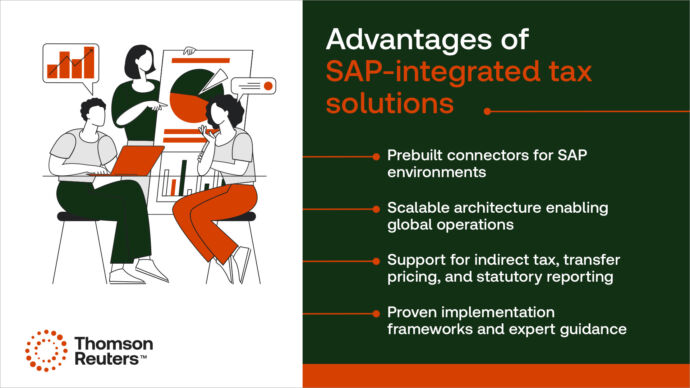
Whether your organization is planning a migration or it’s already in progress, Thomson Reuters can help you navigate the complexities of tax automation.
Next steps for tax leaders migrating to SAP S/4HANA
If your team is preparing for a migration to SAP S/4HANA, now is the time to prioritize tax automation. Start by assessing your current processes, identifying gaps, and engaging stakeholders across finance and IT.
Before diving into automation, make sure your organization has the right foundation in place: strong master data governance, readiness for integration, and secure data protocols. Leaders at the roundtable emphasized that without these elements, even the most advanced tools may not deliver the expected results.
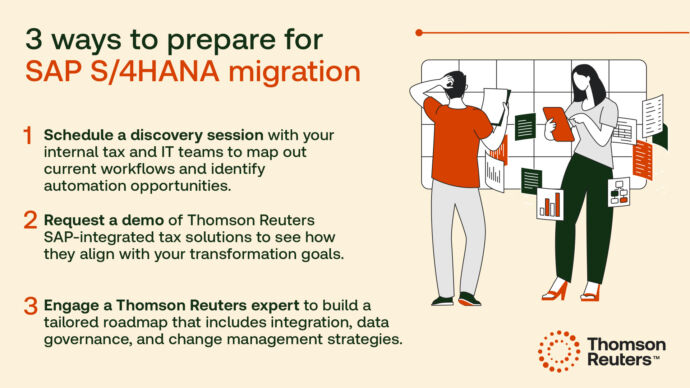
Taking these steps now will help your organization avoid costly delays, reduce compliance risk, and unlock long-term value from your ERP investment.
Are you ready to simplify tax compliance in SAP S/4HANA?
Connect with a Thomson Reuters tax technology expert today to learn how our solutions can support your business transformation goals.

Explore SAP-certified solutions
Customers achieve global tax and financial compliance for SAP
Contact us ↗