Highlights
- Supreme Court struck down IEEPA tariffs; Section 301 and 232 remain active and expanding.
- Section 122 faces legal challenges and expires July 2026 under statutory limits.
- Integrated trade management systems now essential to navigate fragmented tariff authority landscape.
For most of 2025, the tariff story was dominated by a single legal instrument: the International Emergency Economic Powers Act (IEEPA). It was the broadest tool available, applied sweepingly across U.S. trading partners, and it set the compliance agenda for trade professionals worldwide. Then, on February 20, 2026, the U.S. Supreme Court struck it down. In the months since, trade compliance professionals have been asking a foundational question: if IEEPA is gone, what’s left?
The answer matters enormously. According to the Thomson Reuters Institute 2026 Global Trade Report, 72% of trade professionals now identify U.S. tariff volatility as their primary challenge — up from 41% in 2024. Supply chain management has become the top strategic priority for 68% of respondents. The stakes are high, and clarity on the legal foundation of tariff obligations is the prerequisite for everything else.
This is the first in a three-part series on navigating tariff compliance in 2026. It maps the legal landscape: which tariff authorities remain available to the government, which are contested, and what each one means for trade compliance teams.
Jump to ↓
The U.S. government’s tariff authority toolkit: What’s standing, what’s contested, and what’s gone
What the U.S. tariff authority landscape means for your compliance program
 |
|
The U.S. government’s tariff authority toolkit: What’s standing, what’s contested, and what’s gone
The U.S. tariff environment has never been the product of a single law. It reflects a collection of distinct legal authorities — each created for different policy purposes, carrying different procedural requirements, and presenting different levels of litigation risk. Some are active and durable. Some are being challenged in the courts. And at least one, which had been the most expansive of the group, has now been removed from the toolkit entirely.
For trade compliance teams, the authority behind a tariff matters as much as its rate. It determines the tariff’s scope, the compliance obligations it creates, and its likelihood of surviving legal challenge. “When we’re writing about tariffs, the first question isn’t even just what’s the rate,” notes Andrew Moxon, Senior Product Marketing Manager for ONESOURCE Global Trade at Thomson Reuters. “It’s what is the legal authority that it’s based on.”
IEEPA: The broadest instrument — now removed from the table
IEEPA was, until recently, the administration’s most expansive tariff tool — giving the president broad authority to regulate or prohibit economic transactions in response to a declared national emergency. No president had ever used IEEPA to impose tariffs before the Trump administration tested the theory in 2025, applying sweeping reciprocal and fentanyl tariffs across U.S. trading partners. IEEPA dominated the compliance landscape for the entirety of that year.
On February 20, 2026, the Supreme Court ended that chapter in a 6-3 ruling holding that the administration’s use of the law exceeded presidential authority. CBP stopped collecting IEEPA tariffs within hours. As a tool for imposing tariffs, IEEPA is no longer available. All compliance and audit work related to IEEPA entries now belongs to the retroactive record.
For manufacturers who paid IEEPA tariffs throughout 2025 and into early 2026, however, the ruling has opened a potential recovery path. CBP launched the Consolidated Administration and Processing of Entries (CAPE) system in April 2026 as the exclusive portal for recovering these duties — with an estimated $166–179 billion (Penn-Wharton Budget Model estimate) in duties and more than 333,000 importers in scope. Clean, well-organized historical entry data is the prerequisite for any successful claim. If your team has not yet assessed its IEEPA exposure or begun preparing records for the CAPE process, that work is time-sensitive.
Section 122: A limited stopgap, currently contested
When IEEPA fell, the administration moved quickly to Section 122 of the Trade Act of 1974, invoking it to impose a 10% global tariff effective February 24, 2026. Section 122 is a structurally constrained instrument: it caps tariffs at 15%, limits their duration to 150 days, and ties their use to “large and serious balance-of-payment deficits,” with Congressional action required for any extension.
Legal challenge followed rapidly. Critics contended that a trade deficit and a balance-of-payment deficit are legally distinct, and the Court of International Trade found the Section 122 tariffs unlawful in early May 2026. The government has appealed. The tariffs themselves are set to expire July 24, 2026 under their own statutory terms, absent congressional extension. As a government tariff-imposing instrument, Section 122 is both structurally limited and currently contested in the courts.
Section 301: Proven and durable
In contrast to the contested authorities above, Section 301 of the Trade Act of 1974 is among the most legally tested and operationally durable instruments in U.S. trade law. Managed by the U.S. Trade Representative, Section 301 authorizes tariffs targeting specific countries or trade barriers — focused on unfair practices including intellectual property violations, forced technology transfer, and market access restrictions.
Section 301 tariffs carry low litigation risk. Applied extensively against China in the first Trump administration and largely continued by the Biden administration, they carry significant legal precedent. Active investigations now span approximately 76 countries. For manufacturers with supply chains touching affected countries, Section 301 is not a future risk — it is ongoing and expanding.
Section 232: The national security standard
Section 232 of the Trade Expansion Act authorizes the Secretary of Commerce to investigate whether specific categories of imports threaten national security, with the president empowered to act on those findings. Unlike Section 301’s country-based approach, Section 232 is sectoral: it targets defined product categories, not trading relationships.
Currently, Section 232 tariffs are 50% for most countries (25% for the UK) on steel and aluminum, and 25% on copper, apply to steel, aluminum, and copper imports — a list that added 400 new product codes in August 2025 alone. Exposure extends well beyond raw materials to finished goods containing those metals: industrial machinery, HVAC equipment, automotive components, and other manufactured products all fall within scope. Section 232 carries low litigation risk and is expected to remain active.
Section 232 is also the most operationally demanding of the active authorities, generating compliance requirements that go well beyond tracking rates. For a detailed look at what Section 232 compliance requires in practice, see our companion piece: Beyond product classification: what Section 232 requires from global trade teams. Part 2 of this series examines the broader compliance infrastructure demands these durable tariff authorities create.
Section 338: The untested wild card
Section 338 of the Tariff Act of 1930 — a relic of the original Smoot-Hawley legislation — holds a unique status in this landscape: it has existed for nearly a century and has never been invoked. It gives the president authority to impose tariffs of up to 50% on countries that discriminate against U.S. commerce, subject to a 30-day notice requirement.
Whether it will remain unused is genuinely uncertain. The current administration has demonstrated a consistent willingness to test the boundaries of available tariff authorities. If Section 338 were invoked, immediate legal challenge would be virtually certain given its untested status. But “has never been used” is not the same as “will never be used.” Compliance programs that monitor the full range of potential authorities are better positioned to respond if this one comes off the shelf.
 |
|
What the U.S. tariff authority landscape means for your compliance program
The tariff authorities available to the U.S. government in 2026 present a fragmented picture: one major instrument removed, one constrained and contested, two durable and expanding, one theoretical but possible. The compliance challenge for manufacturers is not simply tracking which authorities exist — it is building a program capable of responding to whichever ones are active at any given moment.
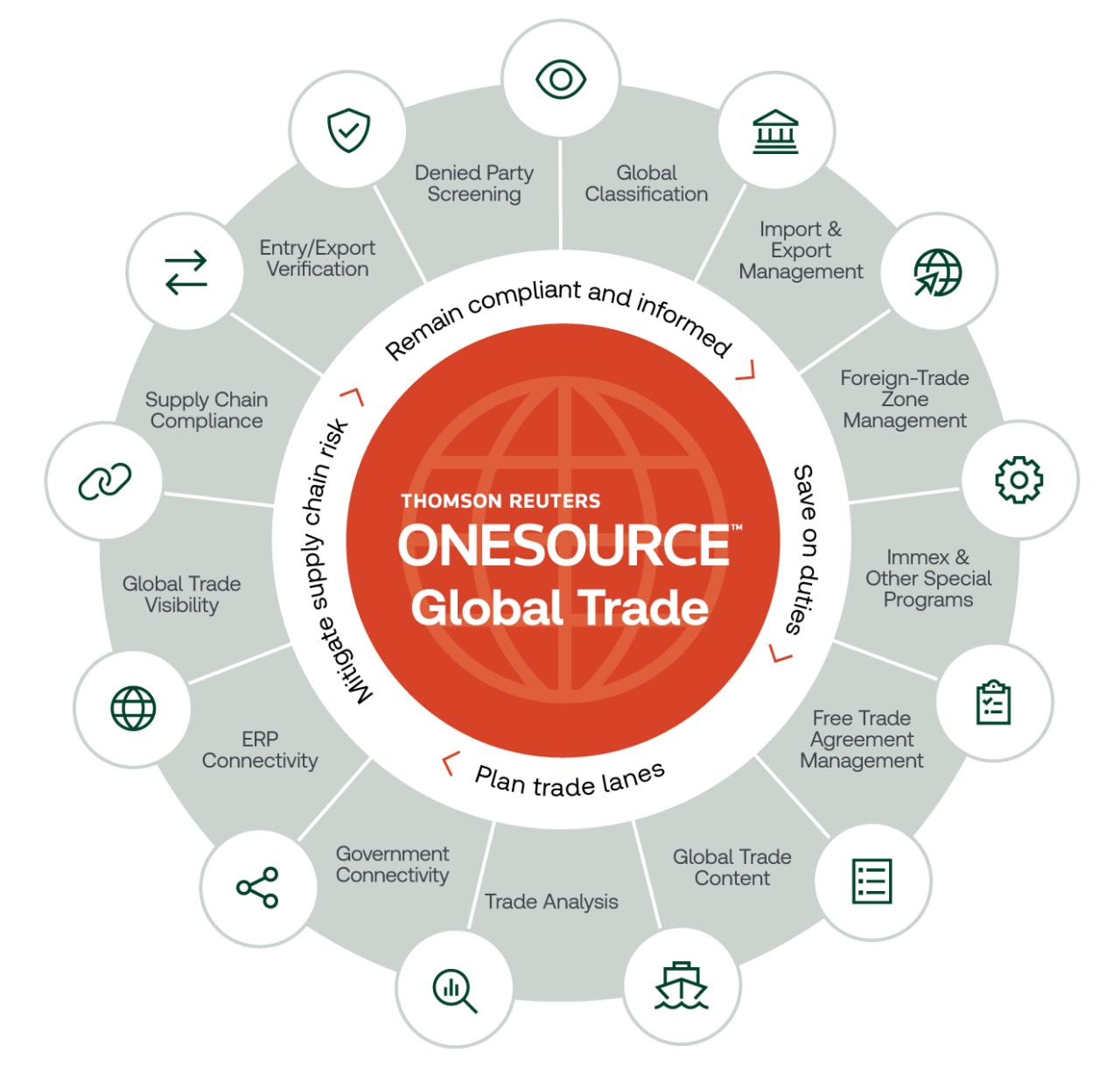
As Marianne Rowden, Consulting Attorney at Brownstein Hyatt Farber Schreck, LLP, observes: “In the past, I’ve known even multinational companies who used spreadsheets for part of their global trade management system. And I think if there was ever a question about whether a company needs an integrated global trade management system, this past year dispelled the idea that a company can rely on spreadsheets or any kind of manual system.”
Integrated global trade management systems that monitor all active authorities continuously — not just tariff rates, but the legal status of those rates — are now a baseline operational requirement, not a competitive differentiator.
Knowing the legal landscape is the first step. The second — and harder — question is what the active authorities demand from your data, systems, and supply chain visibility. That is the subject of Part 2 of this series.
 |
|