It's not a data problem. It's a timing problem.
Highlights
- APIs close the timing gap between accurate global trade reference data and the moment teams actually act on it.
- Static extracts and legacy refresh cycles can't keep pace with tariffs, HS classifications, and export control content that shift constantly.
- Thomson Reuters ONESOURCE Global Trade Content APIs deliver current tariff, duty, and export control data directly inside existing workflows.
Heinrich Schmidt, Senior Solution Consultant for Corporates at Thomson Reuters, opens with this exact scenario in a recent lunch and learn on APIs and visibility in global trade. It’s a familiar one for most trade teams, and that’s precisely the point. As Schmidt tells it, nobody did anything wrong. The data may have been accurate the moment it was pulled, and the team may have followed the process exactly as designed. The problem is that the world kept moving after the extract was taken, and the decision that mattered happened somewhere in the gap.
Jump to ↓
Fixing the global trade reference data timing issue
Why the gap is widening, not shrinking, in trade processes
How APIs can close the gap without adding technical overhead
What integrated global trade reference data looks like in practice
Fixing the global trade reference data timing issue
Most organizations don’t have a shortage of trade reference data. They have good systems, experienced teams, and reference data they trust. What they often lack is a way to get that data in front of the right person at the right moment.
Schmidt’s framing is clear: This isn’t a data problem, it’s a timing problem. The reference data may be correct at the point of extraction, but the business only sees it after a decision has already been made. And in global trade, that gap shows up everywhere. Procurement teams make sourcing calls based on landed cost estimates. Logistics teams move goods on assumptions about duty rates. Classification teams review HS codes that may have shifted since the last review cycle. Export compliance teams check license requirements against control lists that update on their own schedule.
When global trade reference data lives in a periodic extract, a shared spreadsheet, or a legacy system that only refreshes on a set cadence, there’s always a risk that the decision and the data fall out of sync. It doesn’t take a system failure to create that risk. It just takes time passing.
Why the gap is widening, not shrinking, in trade processes
This kind of timing gap is not new, but Schmidt makes the case that it is becoming more consequential. Many organizations built their trade data processes around scheduled extracts, with files pulled weekly or monthly and then distributed through spreadsheets or other systems. That model may have been sufficient for some use cases in a slower environment, but it is less suited to decisions that are time-sensitive.
That is not the environment trade teams operate in now. Tariff measures are introduced, adjusted, suspended, or restructured. HS code-related content and supporting information continue to evolve. Export control classifications and related requirements remain under review. None of this means past processes were poorly designed. It means they were designed for a slower environment, and that environment has changed.
At the same time, expectations have shifted. Teams working alongside AI tools and modern systems increasingly expect current answers, not answers from two weeks ago. The result is a widening distance between when global trade reference data changes and when the business actually sees the change reflected in its workflow.
How APIs can close the gap without adding technical overhead
This is where Schmidt turns to APIs, keeping the explanation grounded in business terms rather than technical ones. At its simplest, an API allows one system to ask another for information and receive a structured answer. Instead of relying solely on a separate login, spreadsheet download, or scheduled update, the consuming system can request current content when it is needed.
For trade teams, that could mean retrieving current HS code information, applicable tariff rates, relevant duty information, or export control number-related content directly within a tool or workflow the team already uses. That might be an internal application, a Power BI dashboard, a Teams notification, an ERP process, or another operational workflow.
Schmidt is upfront that this isn’t a magic fix. APIs don’t remove the need for good governance, compliance judgment, or review. What they do is shrink the distance between trusted global trade reference data and the moment a decision gets made. As he puts it, the value isn’t that API technology is new. It’s been around for years. The value is how relevant it has become now that trade conditions change as fast as they do.
|
|
What integrated global trade reference data looks like in practice
Rather than leave the idea in the abstract, Schmidt walks through three scenarios built on Thomson Reuters ONESOURCE Global Trade Content APIs: a sourcing team comparing landed cost across supplier countries, a classification team monitoring HS-related changes over a rolling window, and an export compliance team checking license requirements in seconds rather than through a manual back-and-forth between teams. Each one represents a different workflow, but the underlying pattern is identical: the right reference data, reaching the right workflow, at the right time.
That pattern is the throughline for this entire series. In the posts that follow, we’ll go inside each of those three scenarios in more detail: how sourcing teams use current duty data to stress-test supplier decisions, how classification teams get ahead of regulatory change instead of reacting to it, and how export compliance teams bring speed and consistency to license screening without giving up rigor.
The takeaway
Compliance confidence isn’t only about whether the correct data exists somewhere in the organization. It’s about whether that data is available at the exact moment someone needs to act on it. APIs give trade teams a way to move from static extracts and delayed updates toward agile, workflow-based access to current trade reference data. This isn’t about replacing the expertise trade professionals bring. It’s about putting trusted, current data directly where decisions already happen.
The question worth asking isn’t whether your organization has access to good trade reference data. It almost certainly does. The question is where a few extra hours, or days, of currency would make the biggest difference in your workflow.
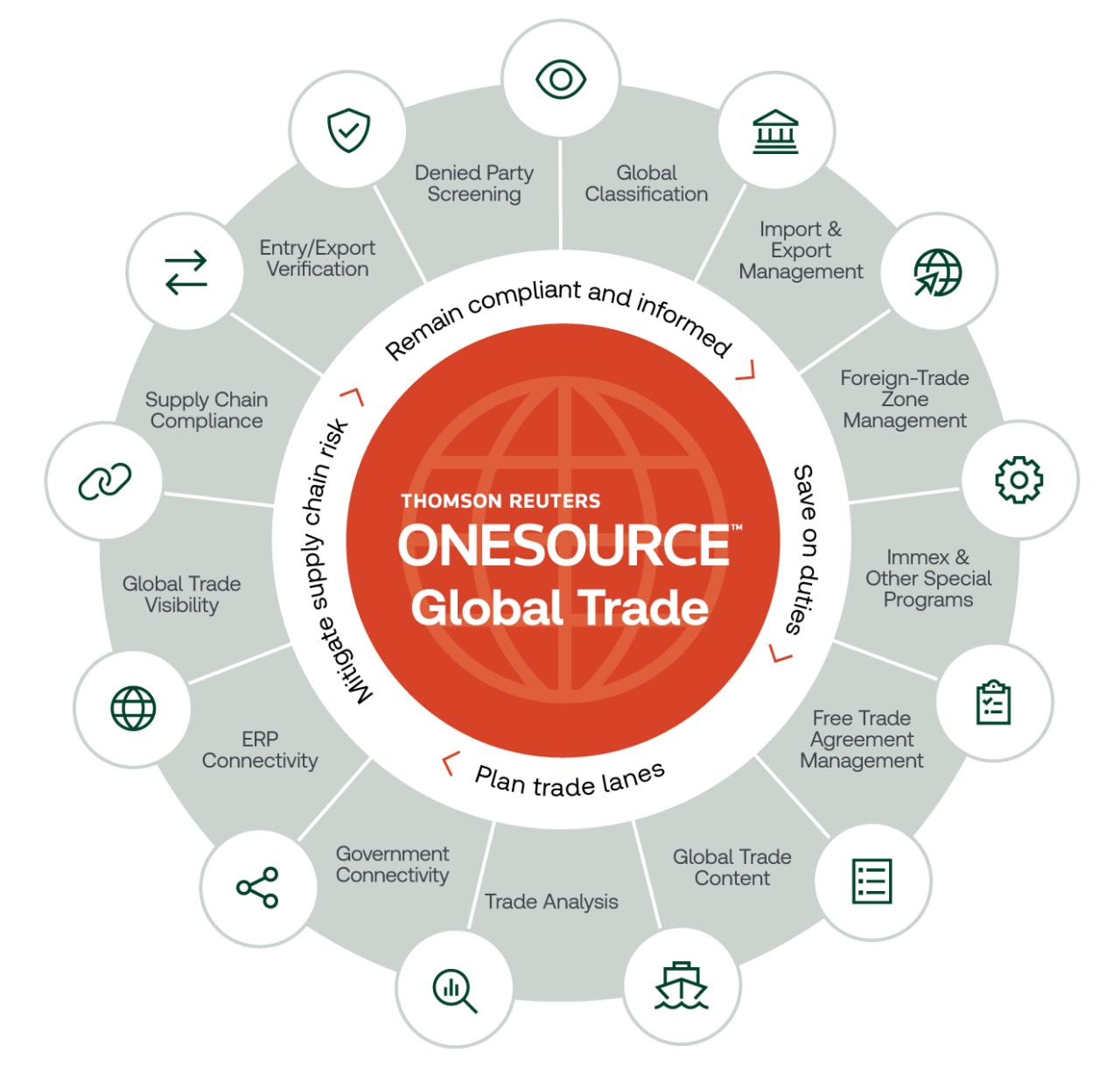
Explore ONESOURCE Global Trade to see how current tariff, duty, and export control content can reach your workflow faster.
 |
|