Highlights
- Section 232 and 301 now require component-level documentation and supply chain visibility beyond traditional classification.
- Thomson Reuters processed over 155 million tariff updates in 2025, with 2026 pace expected to exceed that.
- Compliance now demands retroactive auditing, real-time monitoring, and forward-looking scenario modeling simultaneously.
Knowing which tariff authorities the U.S. government has available is necessary groundwork. But knowing the landscape and being equipped to comply with it are two different things. The authorities that have proven most durable — Section 232 and Section 301 — are not simply adding higher rates to familiar products. They are demanding a fundamentally different kind of compliance infrastructure: one built around supply chain composition, component-level documentation, real-time regulatory monitoring, and the ability to work backward and forward through a history of near-constant change.
Many organizations are not yet there. And the cost of that gap is being measured in delayed shipments, overpaid duties, audit exposure, and missed refund opportunities.
This is the second in a three-part series on tariff compliance in 2026. It examines what the durable active authorities actually require from manufacturers — and where existing systems consistently fall short.
Jump to ↓
The tariff compliance data demand: Beyond classification and country of origin
The data velocity challenge: 155 million+ updates and no warning system
Tariff compliance now runs in three directions
Closing the data infrastructure gap
 |
|
The tariff compliance data demand: Beyond classification and country of origin
Traditional tariff compliance rested on two core questions: how is this product classified, and which country did it come from? Those questions remain relevant. But the tariff authorities now driving compliance obligations have added a third question that most trade management systems were never designed to answer: what is this product made of, and where did each component originate?
Elizabeth Connell, Vice President of Product Management at Thomson Reuters, describes what the market is hearing: “The biggest need we’re hearing about in the market is visibility into supply chains. Compliance professionals need to access information at the bill of materials level, which is not typically data readily available in any ERP or system anywhere.”
Section 232 is emblematic of this challenge. With tariffs of up to 50% on steel, aluminum, and copper — and those rates extending to finished goods containing those metals — manufacturers must now document metal content at the component level across their product portfolios. A manufacturer of industrial machinery, HVAC systems, or automotive components cannot simply report the product’s HTS classification. They need to know what percentage of each product’s value or weight derives from covered metals, sourced from which countries, across potentially dozens of sub-assemblies and inputs.
Section 301 creates a parallel obligation around country of origin. With active investigations targeting approximately 60 countries and rate structures varying significantly by sourcing location, manufacturers need granular visibility into where every component in their supply chain was produced — not just where the finished product was assembled.
The Express Fasteners, Ltd. v. United States case has become a focal point for the legal dimensions of this data challenge. As Marianne Rowden, Consulting Attorney at Brownstein Hyatt Farber Schreck, LLP, explains: “One of the principal counts in that Express Fasteners case is the fact that CBP is asking for data that was never approved by the Office of Management and Budget.” Whether CBP can compel this data is being litigated. Whether manufacturers will have it ready when asked is already determining outcomes.
For a deep dive into what Section 232 specifically demands, see our companion piece: Beyond product classification: what Section 232 requires from global trade teams.
The data velocity challenge: 155 million+ updates and no warning system
Solving the data visibility problem is necessary but not sufficient. Manufacturers also face the challenge of keeping pace with the rate at which the regulatory rules themselves change — across every active authority, simultaneously, without predictable schedules.
The numbers are unambiguous. As Connell notes: “The sheer volume is unprecedented. Our [Thomson Reuters] content team performed over 155 million tariff updates in 2025, and the current pace of change in 2026 suggests that this year will surpass that mark.”
These updates arrive without warning. A tariff change can be announced via executive order at any hour, published in the Federal Register the following morning, and take effect within days — or retroactively. Manufacturers relying on periodic content reviews, broker bulletins, or manual government website monitoring will always have a compliance gap. The question is not whether that gap exists, but how large it is and what it is costing.
Rowden frames the operational consequence plainly: “So it’s either costing you time or money. That’s the sort of impact of not having real-time data.” Shipments held at port while documentation is assembled, or maximum tariff rates paid because component allocation data wasn’t current — these are not theoretical risks. They are the predictable outcome of compliance systems that lag behind the regulatory environment.
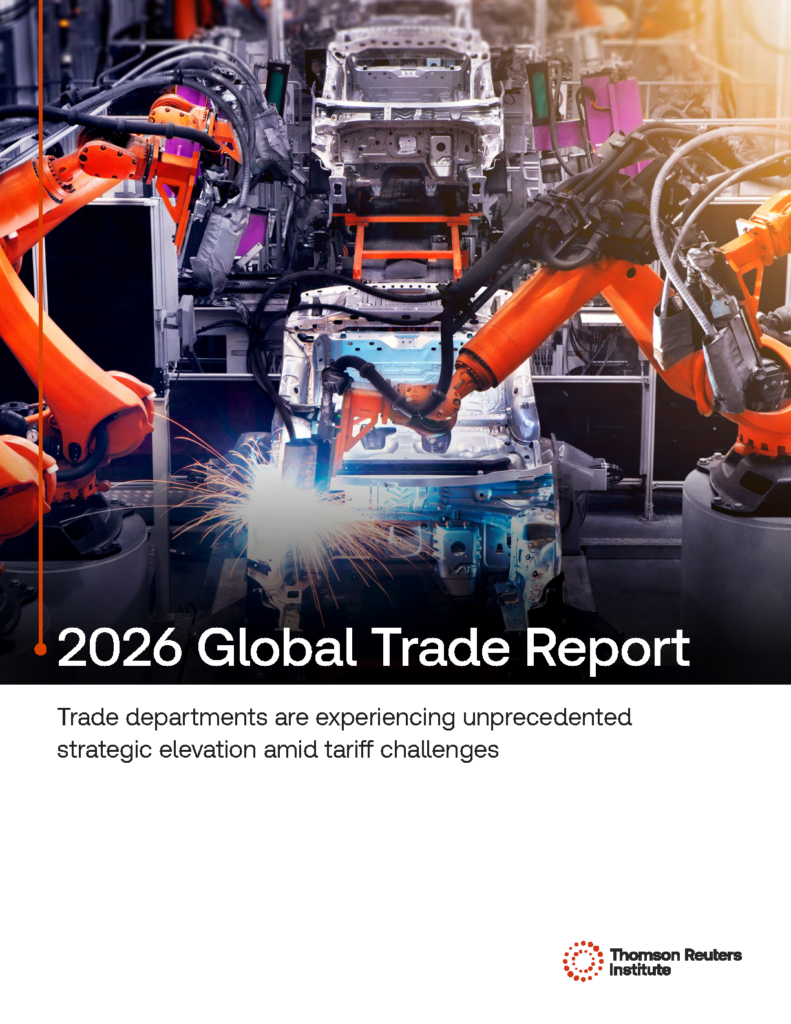
The Thomson Reuters Institute’s 2026 Global Trade Report documented a striking gap: despite 72% of trade professionals citing tariff volatility as their top challenge, only 7% report using software specifically designed to manage tariff changes. That disparity between awareness and action is where compliance risk concentrates. Integrated global trade management platforms that monitor regulatory changes continuously across all active authorities have moved from optional upgrade to operational baseline.
 |
|
Tariff compliance now runs in three directions
Perhaps the most underappreciated challenge of the current tariff environment is temporal. Trade compliance used to be primarily a forward-facing discipline: know today’s rules, apply them to today’s shipments. The current environment demands something more complex — the simultaneous capacity to audit what has already been filed, validate what is happening right now, and model what may come next.
“Compliance is more than just today; it needs to be able to look backward and forward. We’re seeing that trade compliance professionals need to perform retroactive analysis specific to the tariff landscape at a particular date and time, as well as forward-looking forecast and planning and simulation,” explains Connell.
Anne Elise Herold Li, Shareholder at Brownstein Hyatt Farber Schreck, LLP, describes the retroactive dimension directly: “It’s almost like a game of ‘Back to the Future.’ We have to program a date and is like: on this date, was this true? So you have this retroactive audit that you need to be doing to ensure you are compliant at a date and time, and then you have to have a forward-looking forecast and planning and simulation and preparation.”
The retroactive requirement carries direct financial implications. For manufacturers who paid IEEPA tariffs during 2025 and into early 2026, the Consolidated Administration and Processing of Entries (CAPE) refund system represents a potential recovery of overpaid duties. But assembling a refund claim requires precise knowledge of which entries were affected, at which rates, on which specific dates. That historical record does not exist in most ERP systems by default. For manufacturers who haven’t begun that work, the opportunity is actively narrowing.
The vendor layer: Exposure beyond your own imports
The compliance challenge extends beyond a manufacturer’s direct imports. For many organizations, significant tariff exposure sits within the supply chain itself — with vendors who serve as the importer of record for inputs and components.
As Herold Li explains: “When you buy products from your vendors, sometimes they’ve paid tariffs, sometimes you’re a vendor yourself and you have to figure out if you’re passing the tariffs on to your customers.” A company that is not the importer of record has limited direct standing to pursue refund or audit matters independently. The practical path runs through commercial relationships: negotiating cost pass-throughs, encouraging vendors to pursue their own claims, and restructuring purchasing terms to reflect the tariff reality.
Supply chain visibility tools capable of modeling tariff exposure across vendor relationships — not just direct imports — are increasingly central to a complete compliance posture. Understanding where your exposure sits, including where it sits in your supply chain rather than your customs filings, is the foundation for managing it.
Closing the data infrastructure gap
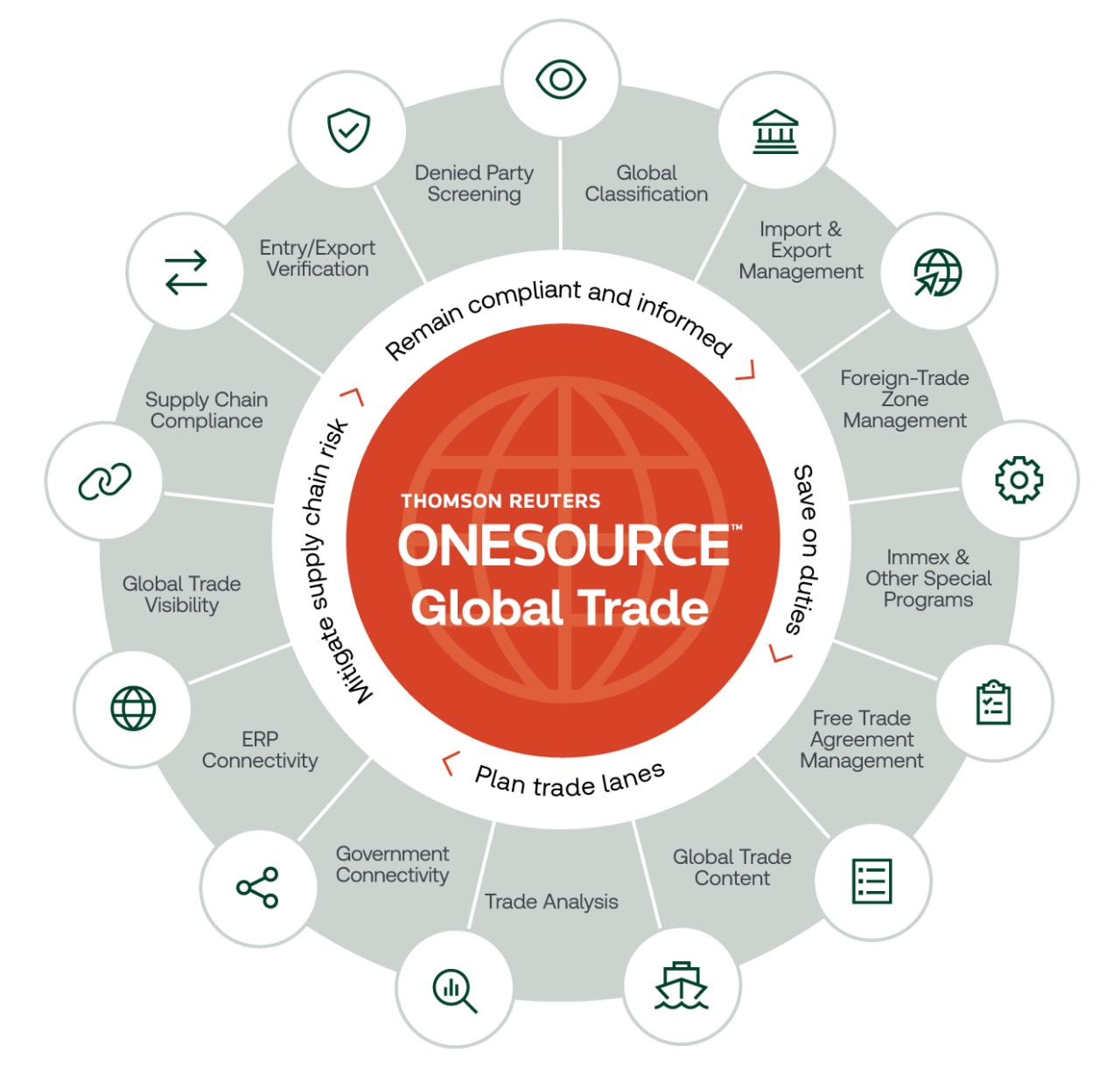
The compliance demands created by the current tariff environment — component-level data visibility, real-time regulatory monitoring, multi-directional temporal capacity, and multi-tier supply chain transparency — represent a meaningful step change from what most trade management programs were built to deliver. Meeting them requires not just new tools, but a rethinking of how trade data is collected, standardized, and maintained across the organization.
Part 3 of this series addresses the practical response: how AI is changing the compliance calculus, what an integrated technology approach looks like in practice, and a 90-day roadmap for manufacturers ready to close the gap between where their programs are today and where the current environment requires them to be.
 |
|