
Highlights
- Context engineering ensures AI models have the right information to produce reliable, audit-ready outputs.
- Unlike prompt engineering, context engineering manages information across interactions, sessions, and users strategically.
- Evaluating AI tax solutions requires understanding how systems handle authoritative sources, effective dates, and transparency.
The wave of early AI adoption has passed, and now firms are increasingly focusing on strategic ways to leverage AI and make it a central part of their business strategy.
Consider this: The 2026 AI in Professional Services Report by Thomson Reuters Institute found that 69% of tax firms surveyed said that generative AI (GenAI) is either currently a central part of their firm’s workflow or will be within the next two years.
Within tax and accounting, the approach to AI is evolving. It is shifting from merely “asking questions” to developing reviewable workflows. The main difference is that it is no longer about producing outputs; it’s about providing the right context to ensure the results are reliable and defensible. Enter context engineering.
As firms assess AI solutions, understanding how these tools handle context is crucial in determining whether they deliver accurate, audit-ready results or create more work than they save.
Jump to ↓
Where context engineering shows up in tax and accounting workflows
How to make AI outputs defensible and audit-ready
A context-first checklist for evaluating AI tax and accounting solutions
What is context engineering?
Context engineering involves carefully organizing and managing all the information an AI model uses when generating a response. While prompt engineering focuses on asking the right questions or providing clear instructions, context engineering is about making sure the model has the right knowledge, tools, and background information before it starts working.
In many ways, context engineering mirrors the way professionals already approach technical accounting work. It is essentially the same discipline applied in a different medium.
Angela Liu, founder of Gaapsavvy, a community and resource hub for technical accountants, finance leaders, and practitioners, provided the following example: When researching a complex revenue recognition question, you don’t just restate the entire ASC 606. You identify the specific issue, connect it to relevant interpretive guides, and understand how each answer influences the next step. You draw on prior transactions and professional experience, selectively apply the most relevant guidance, and compare conclusions against precedent, including regulatory inquiries and peer practices. Throughout the process, you test your reasoning with managers and auditors, refining the analysis until the logic is sound and defensible.
“That’s context engineering. You’re taking a massive universe of information and curating the smallest possible set of high-signal inputs that lead to a decision,” she wrote.
Think of context engineering as creating the complete information environment around the AI model. It’s not about instructing AI on what to say but rather ensuring it has the right resources available. The quality of the context directly influences whether an AI system can produce work that stands up to partner review and regulatory scrutiny.
Context engineering vs. prompt engineering
Prompt engineering is where most people begin. It’s usually a one-time process that happens in the moment. You create a specific query or instruction, send it to AI, and receive a response. The entire exchange occurs in a single request-response cycle. For simple tasks like summarizing a document or drafting a standard email, prompt engineering can be enough.
Context engineering strategically manages the information available to the model across interactions, sessions, and users. For tax professionals, this helps ensure that AI responds with awareness of client history, relevant tax authorities, and workflow stages, etc., rather than addressing questions in isolation.
Prompt engineering optimizes how a question is asked, while context engineering defines the environment in which the answer is produced. Both are important, but context engineering is essential for building reliable, audit-ready output.
Context engineering vs. RAG
In recent years, much of the discussion focused on retrieval-augmented generation (RAG). RAG, a foundational component of context engineering, remains important, but it is evolving.
RAG finds relevant documents from a knowledge base in real time and adds them as context when AI creates a response. Rather than relying solely on what the model learned during training, RAG incorporates up-to-date, reliable sources to support the answer.
In tax applications, RAG may retrieve Internal Revenue Code sections, recent court rulings, or firm-specific guidance based on the user’s query. This approach ensures that AI references up-to-date authorities rather than potentially outdated training data.
However, RAG is just one part of context engineering. RAG is about finding the right information quickly. Context engineering works on a broader level. It organizes and optimizes all of the information (such as retrieved documents, conversation history, and system rules) so they work together within the model’s context window to produce better results.
Where context engineering shows up in tax and accounting workflows
Context engineering becomes most visible in tax and accounting when AI is embedded directly into end-to-end workflows rather than used as a standalone tool. This is especially true as agentic AI gains traction across the profession.
In tax and accounting practices, there are several critical ways context engineering manifests. These include, but are not limited to:
- Pre-review return preparation. AI systems ingest source documents, prior-year returns, and client data, then structure that information within a defined review framework. Context engineering ensures historical positions, assumptions, and tax logic are applied consistently before professional review begins.
- Embedded authoritative tax guidance. Relevant tax law, regulations, and firm-approved interpretations are surfaced directly within AI-assisted analysis. Context engineering governs source selection, authority hierarchy, and effective dates so conclusions are grounded and defensible.
- Client- and firm-specific knowledge reuse. Prior conclusions, engagement history, and internal guidance are incorporated as structured context. This allows AI outputs to reflect institutional knowledge rather than generic tax interpretations, improving advisory engagements.
For example, Thomson Reuters offers agentic AI-powered solutions and the expansion of authoritative content in its CoCounsel platform.
“The accounting profession is at an inflection point, where AI is no longer just a productivity tool but a fundamental transformation in how work gets done,” said Elizabeth Beastrom, President of Tax and Accounting Professionals at Thomson Reuters. “Agentic AI reduces repetitive work so professionals can advise with speed and confidence. With CoCounsel now in use at over 1,300 firms, we’re building on that momentum to help the profession modernize and grow.”
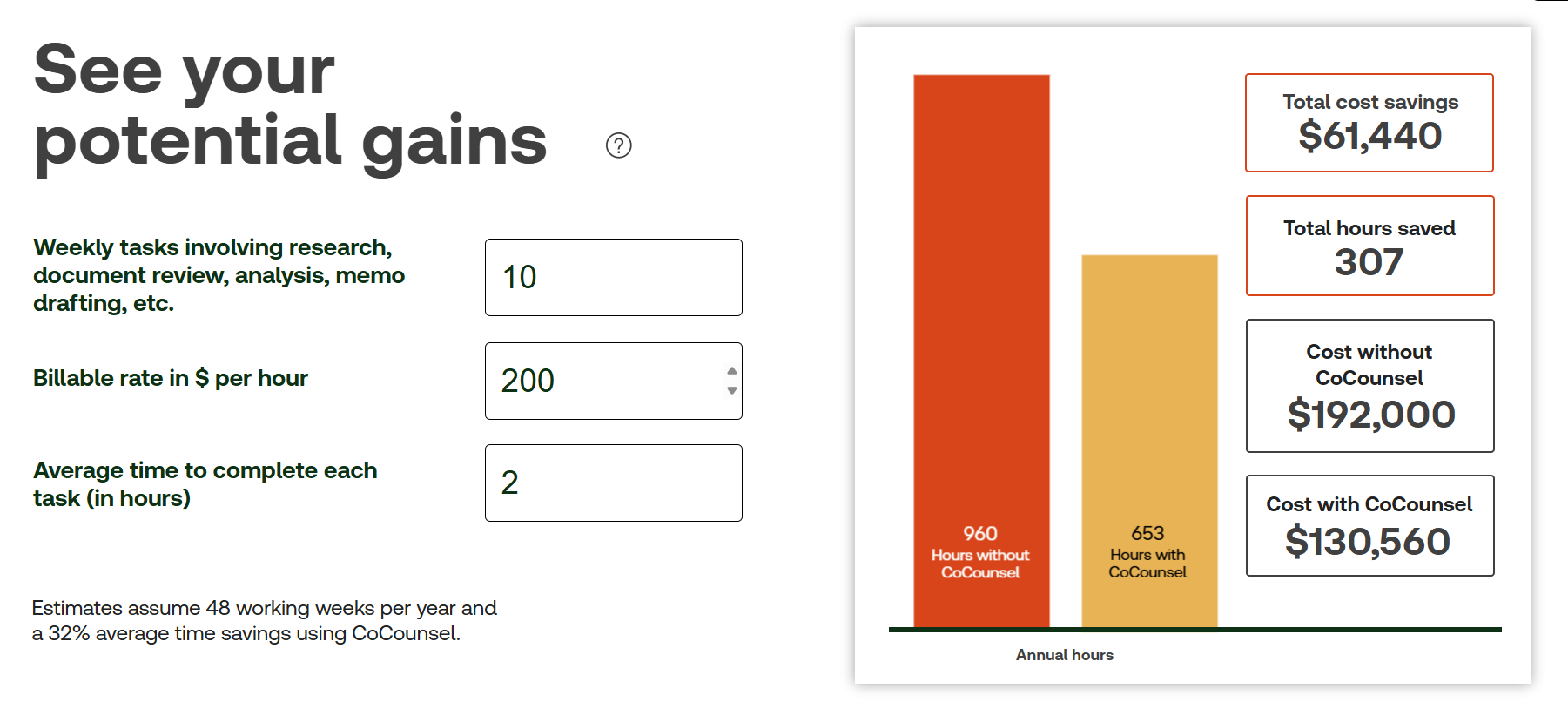
ROI calculator
Discover how much time your firm may save with CoCounsel Tax & Audit
Try calculator ↗How to make AI outputs defensible and audit-ready
Context engineering enables several critical capabilities that help ensure the reliability of AI outputs. These include:
- Authority and citation. AI tools must differentiate between responses based on authoritative sources and those formed through general reasoning. Context engineering maintains clear connections between generated content and source materials, ensuring outputs specifically cite code sections, regulations, or case law.
- Currency and effective dates. Tax law changes often, and positions that were correct six months ago may now be outdated. Context engineering tracks effective dates carefully, making sure the AI uses current guidance and highlights recent updates.
- Consistency across interactions. When team members work on related client matters, AI should maintain consistent positions and alert members of potential conflicts. This involves preserving firm knowledge and client history across various users and sessions.
- Transparency in reasoning. Instead of just showing conclusions, defensible systems reveal how they reached their decisions and what sources influenced their analysis. This speeds up partner review and makes it more effective.
- Proper handling of missing information. When there isn’t enough context to provide a reliable answer, production-ready systems recognize their limitations instead of creating convincing, yet false, responses. This could involve indicating that more client information is necessary or noting when the question exceeds the system’s authority.
A context-first checklist for evaluating AI tax and accounting solutions
As more AI options flood the market, the real differentiators aren’t the demo moments, but rather the controls behind the scenes. When evaluating AI tax tools, managing partners and tax tech innovation leads should focus on how these systems engineer context to deliver reliable, audit-ready outputs.
Consider asking vendors these questions to help evaluate systems:
- What specific authoritative sources inform your AI responses (e.g., Internal Revenue Code, Treasury regulations, case law, accounting standards)?
- Can the system cite primary sources with section numbers and dates, or does it mix authoritative guidance with general training data?
- How does the tool track effective dates and handle recently enacted changes to ensure outputs reflect current law?
- Will it notify users when guidance might be outdated or replaced?
- Does it integrate with your existing practice management, research, and tax prep systems while maintaining context across platforms?
- Can it access client history and prior-year data without needing manual context setup for each query?
- Can administrators monitor and record what sources the AI accessed, the recommendations it made, and the client data it used?
- Does the system keep audit trails that meet professional standards and regulatory requirements?
- What happens when the AI doesn’t have enough context? Does it recognize gaps and ask for more information, or does it produce plausible-sounding but possibly incorrect responses?
- How does the tool indicate confidence levels or flag when a question needs human judgment instead of an algorithmic response?
For tax and accounting leaders focused on defensibility, governance, and long-term value, context is quickly becoming a leading factor. “Professionals are not deciding whether to use AI anymore. They are deciding which AI they trust when their reputation and their clients’ data are on the line,” said Steve Hasker, President and CEO of Thomson Reuters, in a recent press release. “CoCounsel is built for moments when being almost right is not good enough. It is grounded in decades of authoritative content, validated by domain experts, and backed by a clear commitment that customer data remains theirs. That is why one million professionals rely on CoCounsel.”
Explore for yourself how context-engineered workflows are being applied in practice with a free demo of CoCounsel Tax.