
From disconnected tools to connected outcomes: The blueprint for building a scalable, AI-powered audit environment.
Highlights
- Modern audit success depends on a connected ecosystem that unifies data, AI-driven intelligence, workflows, and compliance.
- The four-layer audit pyramid helps firms reduce silos, streamline processes, and create a foundation for scalable AI adoption.
- Firms that move from fragmented tools to integrated audit operations are better positioned to improve efficiency, quality, and long-term adaptability.
For years, audit firms have added technology to improve engagement efficiency, enhance quality, and address increasing complexity. Yet many firms still struggle with disconnected systems, duplicate work, and fragmented workflows. The challenge is no longer whether firms have technology, but whether that technology works together.
As artificial intelligence continues to reshape the profession, firms need more than standalone tools. They need a connected audit ecosystem where data, workflows, intelligence, and compliance operate as a unified whole.
Jump to ↓
Layer 4: Compliance and reporting
Why the pyramid matters: The blueprint of a modern audit ecosystem
The future of audit is connected
Layer 1: Data foundation
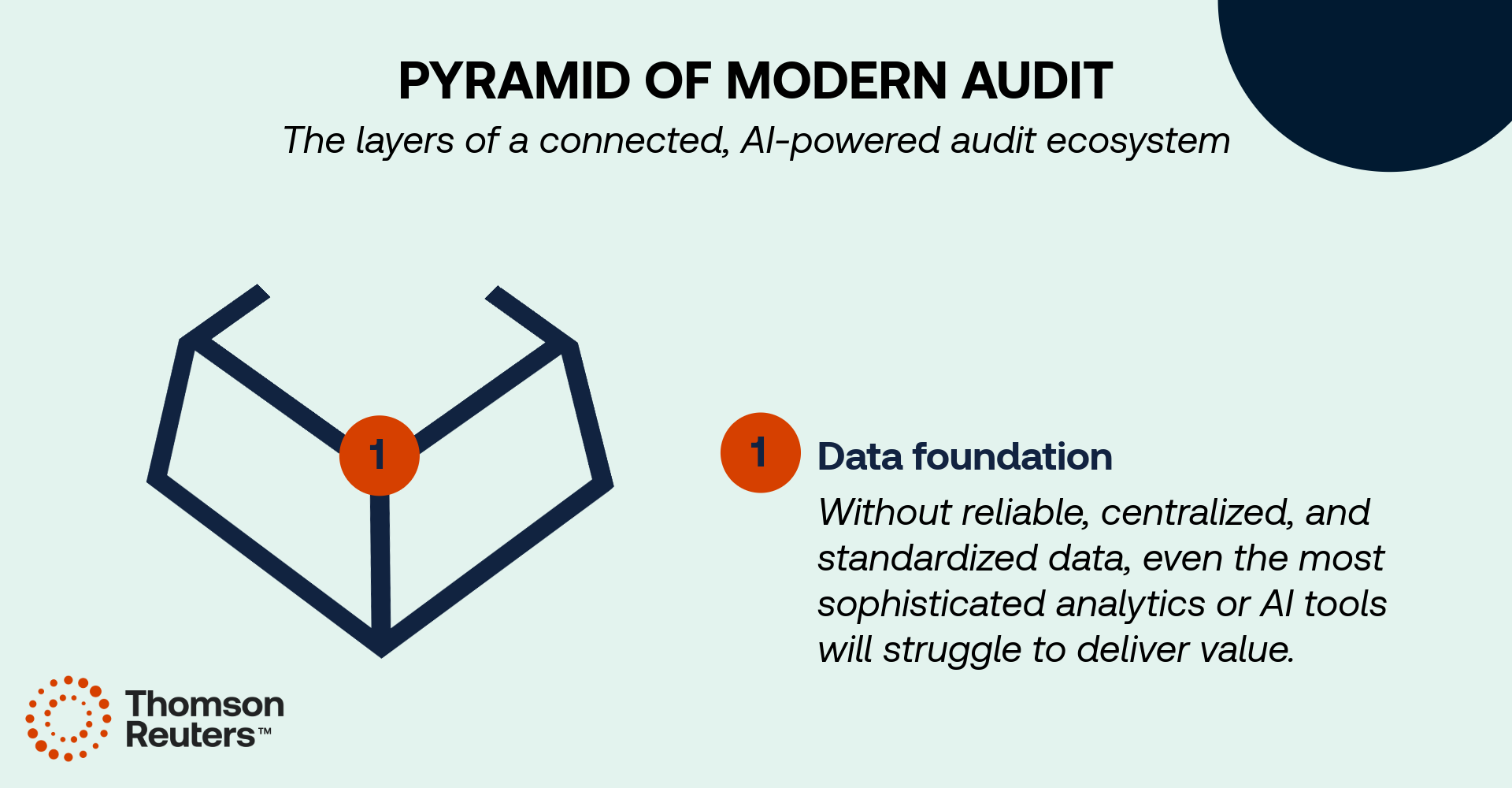
Every successful audit ecosystem starts with a strong data foundation.
Without reliable, centralized, and standardized data, even the most sophisticated analytics or AI tools will struggle to deliver value. Audit teams often spend significant time reconciling information, managing multiple document versions, and validating data from various client systems. These manual processes introduce inefficiencies and increase the risk of errors.
A modern data foundation serves as a single source of truth across the engagement lifecycle. It supports data ingestion from multiple systems, document management, version control, and automated validation processes. By centralizing information and improving data quality, firms can reduce duplicate data entry, improve accuracy, and establish the groundwork for automation and AI adoption.
Think of the data foundation as the base of the pyramid; without it, every layer above might crumble.
Layer 2: Intelligence engine
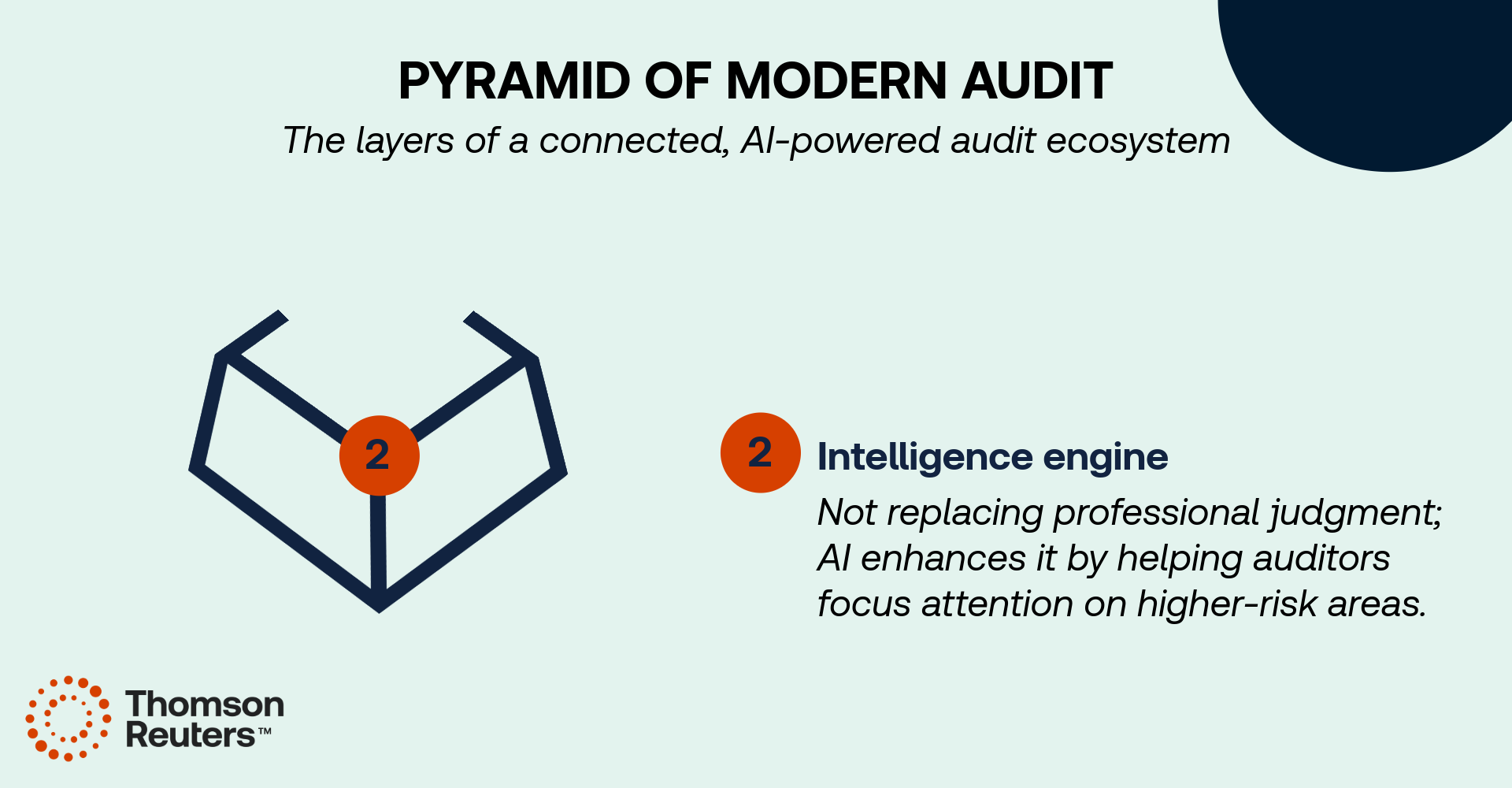
Once firms establish trusted data, they can begin transforming information into insight.
The intelligence engine layer introduces AI-driven capabilities that help auditors identify risks, automate analysis, and improve decision-making. Rather than relying exclusively on manual reviews, audit teams can leverage intelligent systems to surface anomalies, support risk assessments, perform document reviews, and match evidence more efficiently.
This layer is where many firms begin to see the practical benefits of AI. Instead of replacing professional judgment, AI enhances it by helping auditors focus attention on higher-risk areas and more strategic activities. The result is a more responsive audit process that can scale with growing engagement complexity while maintaining quality and consistency.
Importantly, the effectiveness of AI depends on the strength of the data beneath it. Firms that invest in building a connected ecosystem are better positioned to adopt emerging AI capabilities as they become available.
Layer 3: Workflow platform
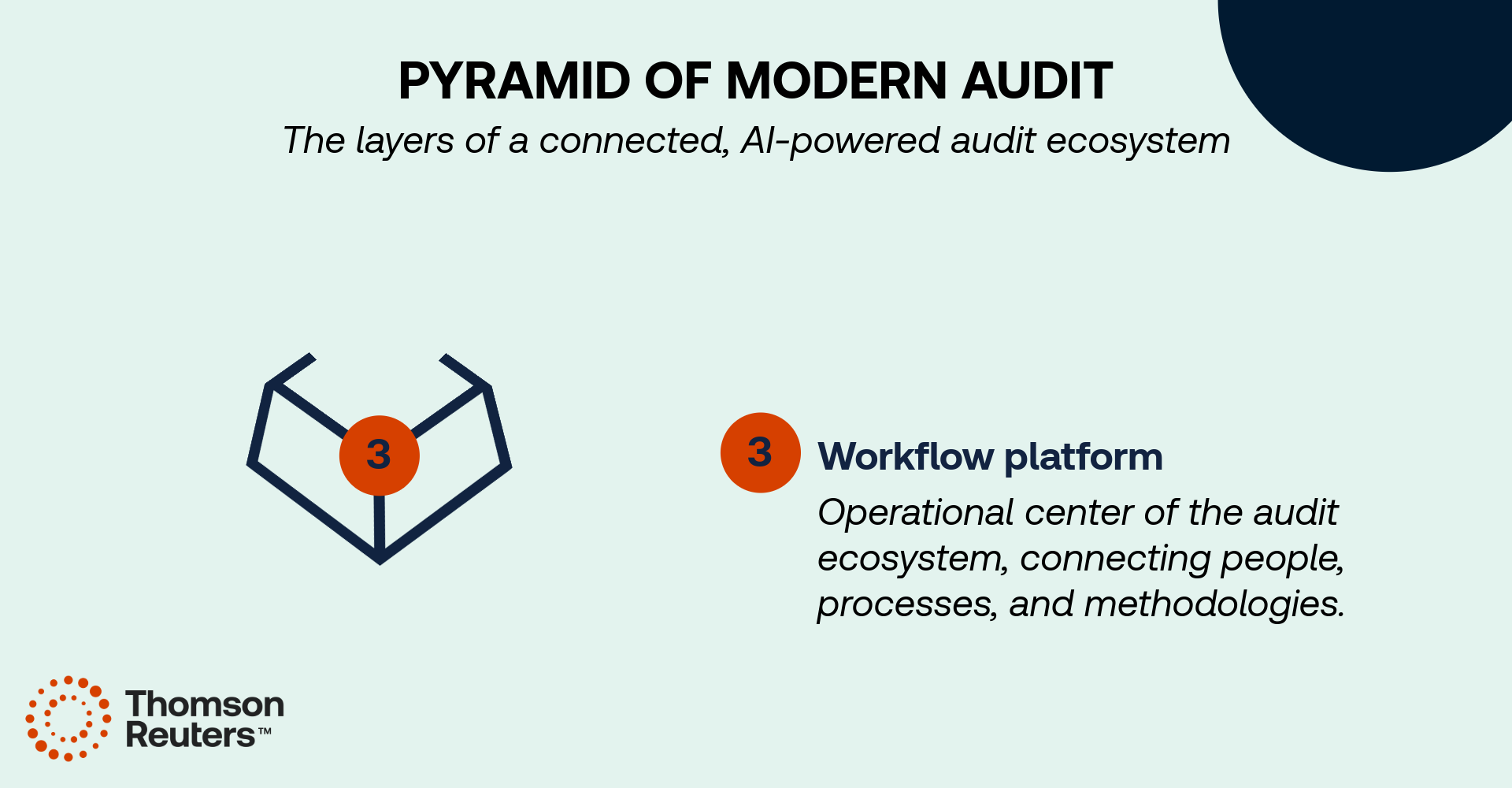
Data and intelligence create value only when they are integrated into day-to-day operations.
The workflow platform serves as the operational center of the audit ecosystem, connecting people, processes, and methodologies. This layer orchestrates tasks, facilitates collaboration, and ensures consistent execution across engagements.
In a connected workflow environment, risk insights generated by the intelligence engine can automatically inform audit procedures, while completed work flows seamlessly into downstream processes. Review and approval workflows become more transparent, communication becomes less fragmented, and engagement teams gain clearer visibility into project status and responsibilities.
The result is greater consistency across offices and teams, fewer manual handoffs, and improved accountability throughout the engagement lifecycle. As firms continue to face staffing pressures and increasing client expectations, connected workflows can help maximize efficiency without sacrificing audit quality.
Layer 4: Compliance and reporting
At the top of the pyramid sits compliance and reporting, the layer that turns audit work into defensible, audit-ready deliverables.
Strong compliance processes are essential in today’s regulatory environment. Audit firms must be able to demonstrate consistency, maintain clear audit trails, and support quality control initiatives across engagements. A connected compliance layer helps ensure documentation remains accurate, accessible, and aligned with firm standards.
When compliance and reporting are integrated with the underlying ecosystem, firms gain stronger governance, improved transparency, and more efficient record retention practices. This visibility becomes increasingly valuable during peer reviews, regulatory inspections, and client reporting activities.
By standardizing reporting workflows and connecting them to upstream processes, firms can reduce risk while improving both operational consistency and reporting accuracy.
Why the pyramid matters: The blueprint of a modern audit ecosystem
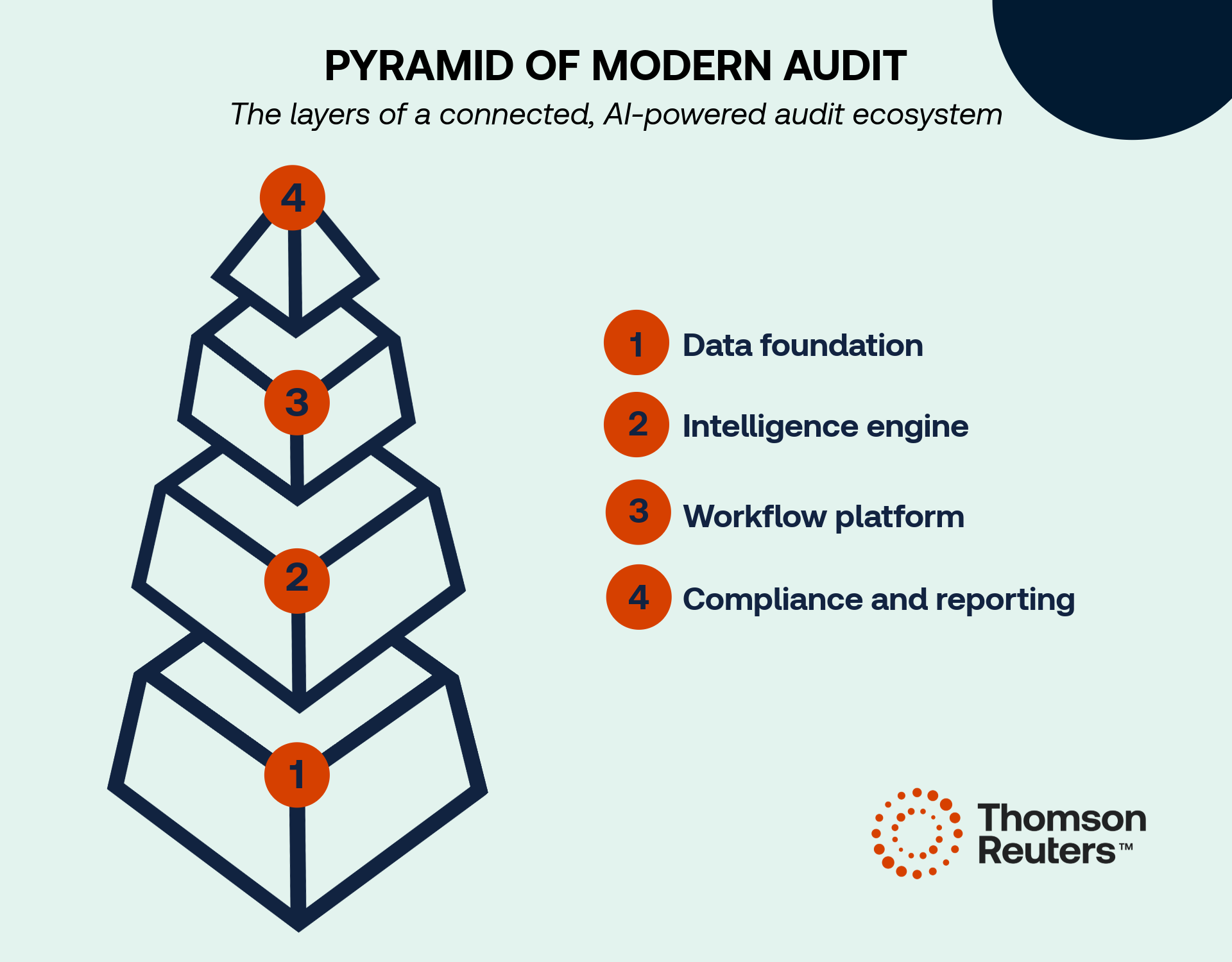
While each layer delivers value independently, the real benefits emerge when all four layers function as a connected ecosystem.
Too often, firms focus on acquiring individual tools to solve isolated challenges. However, disconnected applications frequently create new problems, including duplicate work, data silos, inconsistent processes, and limited visibility. Traditional point-to-point integrations may transfer data between systems, but they rarely create the seamless operational environment required for modern audit excellence.
A connected ecosystem takes a different approach. Information flows automatically across systems, workflows adapt based on real-time insights, and teams operate from a shared source of truth. This creates an environment where technology supports the entire engagement lifecycle instead of improving only isolated tasks.
The pyramid of modern audit provides a high-level framework for understanding how data, intelligence, workflows, and compliance work together to create a connected audit environment. But transforming a fragmented technology stack into a fully integrated ecosystem requires more than a conceptual model. It requires a practical roadmap.
The Thomson Reuters white paper, The modern audit ecosystem blueprint: How to build an Integrated, AI-powered audit environment, takes a deeper dive into the strategies, integration patterns, implementation phases, and performance metrics that help firms modernize with confidence. It also outlines a phased approach for moving from disconnected tools to a scalable ecosystem that supports automation, AI adoption, and long-term operational excellence.
The future of audit is connected
The audit profession is entering a new era in which success depends less on the number of technologies a firm owns and more on how effectively those technologies work together. As AI capabilities continue to evolve, firms with connected ecosystems will be better positioned to modernize operations, improve audit quality, and respond to changing client and regulatory demands.
Ready to build a more connected audit workflow? See how leading firms are completing audits faster with trusted integrations. Dive deeper into the blueprint of a modern audit ecosystem with our latest white paper, Stop patching your audit tech stack together.

The modern audit ecosystem blueprint: How to build an Integrated, AI-powered audit environment
Take a deeper dive into the strategies, integration patterns, implementation phases, and performance metrics that help firms modernize with confidence. Outline a phased approach for moving from disconnected tools to a scalable ecosystem that supports automation, AI adoption, and long-term operational excellence.
Download our white paper ↗