Highlights
- CBP's advance rulemaking could require upstream verification of foreign export documents, supply chain identities, and traceability technology.
- Comments on the proposal are due December 1, 2026, giving trade teams a narrow window to shape the final rule.
- ONESOURCE Global Trade helps close the data-currency gap by keeping import, screening, and supply chain records accurate and current.
On September 2, 2026, U.S. Customs and Border Protection (CBP) published an advance notice of proposed rulemaking titled “Heightened Import Disclosures for Supply Chain Visibility” that could reshape what importers have to prove, and how fast they have to prove it. The notice follows Executive Order 14411, “Strengthening Customs Enforcement,” signed in June 2026, and it signals a shift in enforcement posture: CBP wants supply chain visibility further upstream, before goods ever reach the U.S. border. Import compliance has always depended on accurate paperwork. What’s changing is how much CBP wants, how current it needs to be, and how quickly you’ll need to produce it. For trade teams already stretched thin by tariff volatility, that shift raises the stakes on a question many haven’t had to answer before: not just whether your paperwork is complete, but whether it’s current enough to survive a side-by-side comparison with records CBP pulls from somewhere else entirely.
Jump to ↓
What do CBP’s supply chain visibility requirements actually propose?
Why supply chain visibility matters now, not after the rule is final
The real issue: Data you can verify, on demand
Where ONESOURCE Global Trade fits with the CBP notice
What trade teams should do before December 1
 |
|
What do CBP’s supply chain visibility requirements actually propose?
The rulemaking is still an advance notice, not a final rule, but its shape is already clear. Three proposals anchor it.
- Foreign export documentation requirements. CBP is considering requiring importers of record to obtain, and possibly submit, documents that foreign exporters filed with their own customs authorities: export declarations, foreign commercial invoices, certificates of origin, and export licenses. The point isn’t paperwork for its own sake: CBP wants to line up what a supplier declared abroad against what lands on your U.S. entry summary, which is precisely how schemes like dual invoicing get caught. For goods CBP considers especially high-risk, this documentation could stop being optional recordkeeping and become a precondition for the shipment to clear at all. Most importers don’t currently track these records at all, since they’re generated on the other side of the transaction.
- Who’s really in your supply chain. CBP is questioning whether the decades-old manufacturer identification code still works, and it’s testing whether a global business identifier, such as a D-U-N-S number, a global location number, or a legal entity identifier, should replace or supplement it. CBP also wants clearer visibility into manufacturers, shippers, sellers, distributors, exporters, ultimate consignees, and even the online marketplaces that facilitate a sale, visibility that matters well beyond this one proposal given how entangled supply chain enforcement already is with forced-labor tariff actions now covering the vast majority of U.S. imports.
- Traceability technology and an expanded Customs Trade Partnership Against Terrorism (CTPAT). CBP states outright that it already uses AI-driven tools to flag illegal transshipment risk. It’s also considering whether Customs Trade Partnership Against Terrorism members should be required to use, and share, supply chain tracing technology as a condition of the program’s benefits. CBP is even weighing whether CTPAT members should be barred from relying on logistics platforms controlled by foreign governments, systems like China’s LOGINK, that it now treats as a security liability rather than ordinary software.
Why supply chain visibility matters now, not after the rule is final
It’s tempting to wait for a final rule before acting on any of this. That would be a mistake. CBP posed more than 60 specific questions in the notice, on everything from how long records should be retained to whether small businesses need a longer runway to comply, and it genuinely wants the trade’s answers before drafting anything binding. Comments are due December 1, 2026. Industry associations will weigh in collectively, but company-specific and sector-specific concerns, like how long it actually takes to obtain a foreign export declaration, only get addressed if companies raise them directly.
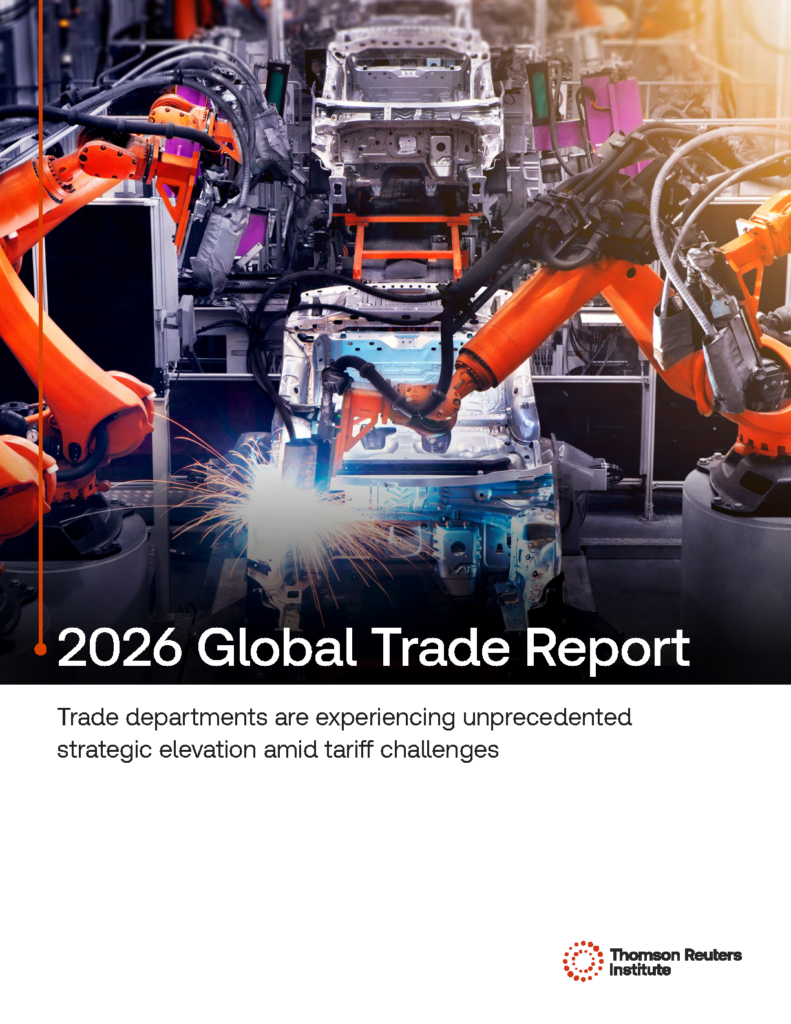
The direction of travel isn’t in question. Thomson Reuters Institute’s 2026 Global Trade Report found that supply chain management is now the top strategic priority for 68% of trade professionals, nearly double the 35% who said so a year earlier. Regulatory pressure and supply chain risk aren’t separate problems anymore. They’re converging.
The real issue: Data you can verify, on demand
Look past the specific proposals and a single requirement runs underneath all three: can you produce accurate, reconciled, current information on request, not once a year during an audit? CBP wants to compare a foreign export declaration’s stated value against your entry summary. It wants confirmation that a manufacturer identifier still points to a real, current business relationship. It wants proof that a CTPAT partner’s screening data hasn’t gone stale.
That’s a harder bar than it sounds. Only 7% of trade professionals surveyed for the 2026 Global Trade Report say their organization currently uses software or an online service to stay current on tariff changes, even as 87% say their business will be highly or moderately affected by the elimination of the de minimis exemption alone. For many trade teams, the shortfall isn’t accuracy so much as a timing problem: the data was correct when someone pulled it, and the business only sees the change after a decision has already been made. Meanwhile, exploration of AI and other emerging technology in trade functions jumped from 6% of organizations in 2024 to 40% this year, a sign that trade teams already know where the gap sits.
Where ONESOURCE Global Trade fits with the CBP notice
This is a moment for readiness, not for compliance with a rule that doesn’t exist yet. No one can build to a final rule that hasn’t been written. What every trade team can do now is make sure its supply chain data is accurate, reconciled, and current enough to withstand whatever CBP ultimately asks for. ONESOURCE Global Trade gives trade teams the infrastructure to close that gap before CBP finalizes anything.
- ONESOURCE Import Management centralizes and reconciles import documentation in one system of record, which is exactly the discipline the foreign export documentation proposal would demand.
- ONESOURCE Denied Party Screening and ONESOURCE Supply Chain Compliance continuously monitor the manufacturers, shippers, and sellers in your supply chain, rather than relying on a static identifier collected once and never revisited, which speaks directly to CBP’s questions about business partner visibility.
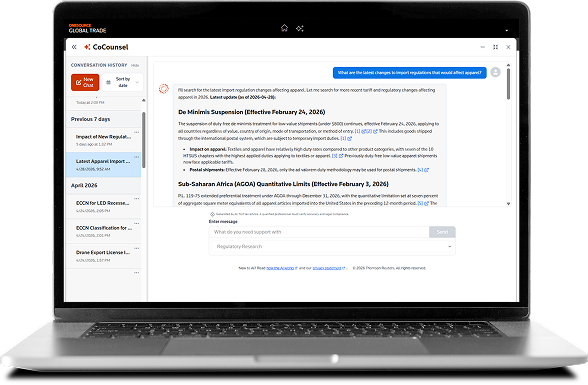
ONESOURCE is also built on Thomson Reuters Fiduciary-Grade AI™, so the technology helping you stay current on your own supply chain meets the same bar of accuracy and accountability that CBP is applying to its own enforcement tools.
What trade teams should do before December 1
Two things belong on your calendar now. Submit comments to the docket by December 1, especially if your industry or company has a documentation timeline, cost structure, or supply chain arrangement that a general industry comment won’t capture. And start closing the data-currency gap the 2026 Global Trade Report points to, independent of how the final rule reads. The trade teams that treat this as a data readiness question today will be the ones least disrupted whenever CBP’s next notice arrives.
 |
|