
Eight criteria to separate real tax prep automation from AI hype.
Highlights
- Traceability wins: Can reviewers trace every figure back to its source?
- Measure review readiness: Focus on how much work is ready to review, not just automated.
- Compare outcomes: Score tools on accuracy, exception handling, scalability, and accountability.
There’s no shortage of tax automation options in 2026, and that abundance has caused confusion for firms that are just looking to find the right tool for their team. If you’re figuring out how to compare AI tax prep software, you’ve probably run into some version of that dilemma.
AI has become a vague blanket term for countless utilities; and not all of them deliver reliable results. So, here’s a framework you can use to run an AI tax prep software comparison across the four options most firms are really weighing.
Jump to ↓
How are firms automating (or delegating) tax prep?
What eight criteria should you use when comparing AI tax preparation software?
How do the four main tax prep options score?
Why does the review layer matter most in AI tax prep software?
Questions you should ask during any consultation for AI tax prep solutions
How are firms automating (or delegating) tax prep?
- General-purpose AI: Prompt-based LLM assistants designed for general use. Flexible and cheap to start, but not built with professional authority for tax preparation.
- AI add-ons: AI features layered onto the platform you already use.
- Outsourced preparation: Relies on third-party human expertise rather than automation. Higher professional standards, but more expensive.
- AI native tax prep: Software built around tax-specific agentic AI, turning client data into a reviewer-ready file.
What eight criteria should you use when comparing AI tax preparation software?
- Source-to-return traceability: Can a reviewer click any number back to its source document? This carries the most weight.
- Verifiable calculation: Are figures calculated and checkable, or generated as plausible text?
- Reviewer-ready output: Does the work arrive organized for review, or does the reviewer redo it?
- Exception flagging: Does it surface gaps, year-over-year anomalies, and judgment calls instead of guessing?
- Data security: Look for SOC 2 reporting, Section 7216 handling, and clear retention terms.
- Workflow fit: Does it connect to your intake, client portal, and e-file process?
- Busy season scalability: Does quality hold at three times the volume?
- Accountability: When something is wrong, can anyone show how it happened?
How do the four main tax prep options score?
| Criterion | General-purpose AI | AI add-ons | Outsourced prep | AI native tax prep |
|---|---|---|---|---|
| 1. Traceability | Weak | Partial | Weak to partial | Strong; drill from return to source |
| 2. Verifiable calculation | Weak; drafts only | Strong, existing engine | Varies by vendor | Strong; dedicated tax engine |
| 3. Reviewer-ready output | Weak | Partial | Varies | Strong |
| 4. Exception flagging | Weak | Partial | Depends on staff | Strong; diagnostics and comparisons |
| 5. Security | Depends on plan | Strong | Third party holds data | Confirm certifications |
| 6. Workflow fit | Copy and paste | Strongest | Email handoffs | One platform through e-file |
| 7. Scalability | Fast, unchecked | Moderate | Lead times | Strong; cloud-based |
| 8. Accountability | Weak | Moderate | Contractual | Strong; visible AI process |
Where does each option fall short?
General-purpose AI writes fluent answers whether or not the numbers are right. Without source links, a reviewer cannot confirm what it produced, so firms check everything twice. Data security also varies from product to product.
AI add-ons are convenient and often win on workflow fit. The limit is depth. Many automate one step, such as document extraction, and leave the rest manual, so the reviewer’s job barely changes.
Outsourced prep becomes extremely scarce during busy season, allowing some vendors to charge premium rates. Turnaround time can also slow down during peak season.
Why does the review layer matter most in AI tax prep software?
Your firm’s name goes on the return, so the standard is “defensible,” not just “fast.” Tools that speed up preparation but leave verification untouched move the bottleneck to your most senior people.
Thomson Reuters Ready to Review (built on the Thomson Reuters CoCounsel platform) was designed to address that problem. AI agents handle the gather and prepare steps, and a set of review tools lets your team check the result without starting over.
How it works:
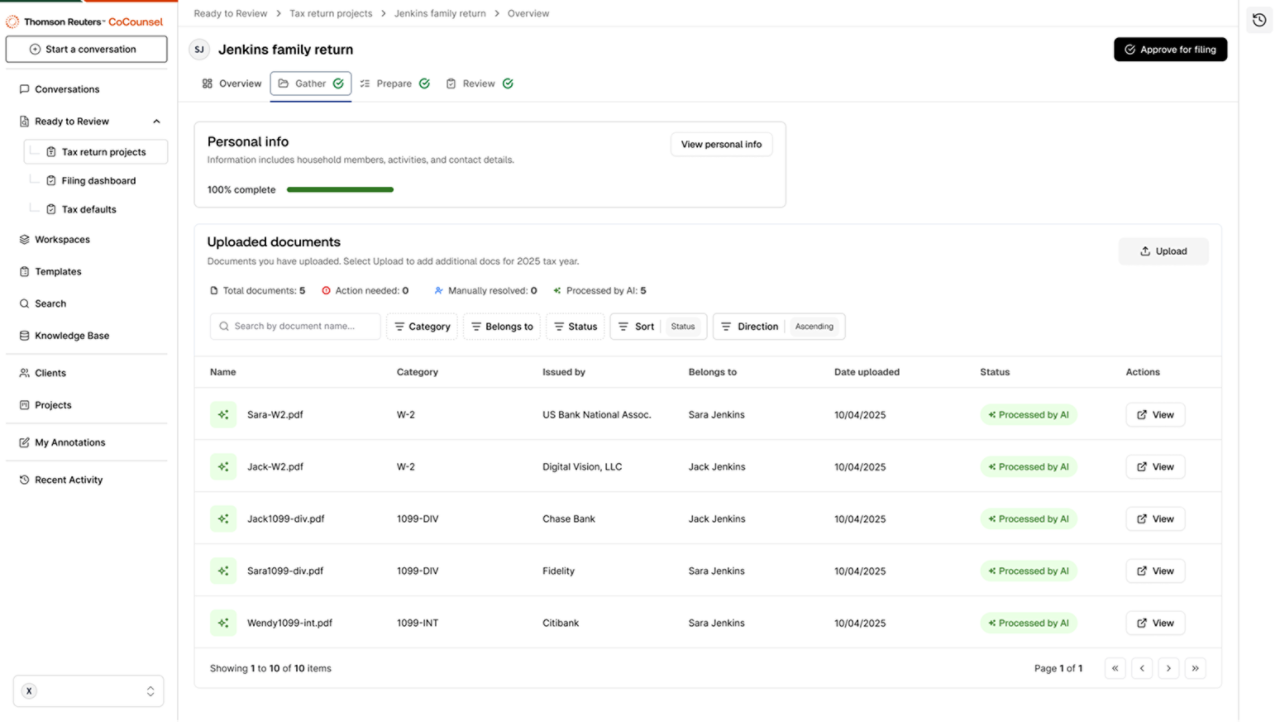
- Gather Agent: Extracts data from source documents and prior-year returns, then flags gaps and verifies what it pulled.
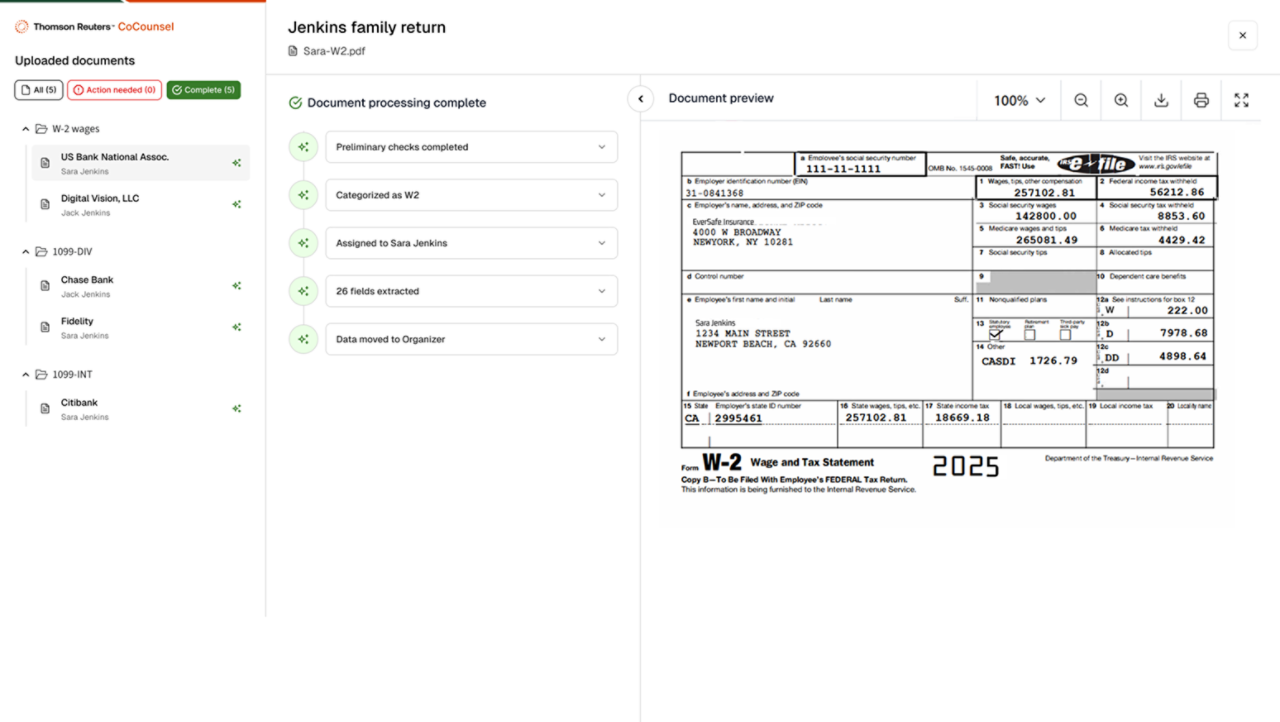
- Tax Preparer Agent: Runs the data through Thomson Reuters GoSystem Tax RS, solves diagnostics on its own, and leaves only the items that need professional judgment.
What the reviewer gets:
- Drill-down to source: Move from any line on the return back to the document it came from.
- Two-year comparison: See year-over-year changes side by side so anomalies stand out.
- Diagnostics view: Work through the flagged items, sorted into review, reviewed, and informational.
- AI Processes view: See how the agents reasoned and where they decided documents should go.

Ready to Review is built on the GoSystem Tax RS engine and backed by 150 years of Thomson Reuters tax content. Scope matters in a fair comparison: As of late 2026, Ready to Review currently handles simple 1040 returns, with complex and business returns in development.
Questions you should ask during any consultation for AI tax prep solutions
Give each vendor the same anonymized client file and score each answer from 1 to 5, doubling the first.
- Can I trace any figure back to its source in two clicks?
- How are figures calculated, and can I check the work?
- How much of the file can a reviewer accept without redoing it?
- What does the tool flag, and what does it silently assume?
- Where is client data stored, and who can access it?
- What does setup look like with my current systems?
- What happens to quality and turnaround at peak volume?
- When an error occurs, what record shows how it happened?
What’s the best next step?
AI native tax preparation is still an emerging technology, but it has the capability to fully transform how firms conduct work and manage busy season. To get a better idea of how it compares to consumer AI and how it fits with your firm, schedule a free, no-commitment Ready to Review demo and see how it stacks up to your firm’s standards.
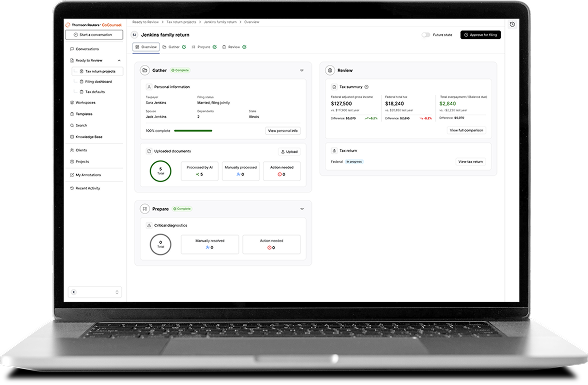
Want to see what Ready to Review does for your tax workflow?
Schedule a free, no-commitment demo to see agentic tax prep in action
Book demo ↗