Why tax return review, not preparation, is often the real bottleneck
Highlights
- Review is the most expensive stage of the tax workflow, with manager and partner time carrying the highest billing rates.
- UltraTax CS users reported tax return reviews were 50% faster on average in a Forrester Total Economic Impact study.
- Early Ready to Review adopters saw up to 70% faster preparation and workpaper review by shifting first-pass review work closer to the preparer.
Talks around tax automation tend to concentrate mostly on preparation, with intake and delivery occasionally receiving secondary focus. Meanwhile, prepared returns pile up as managers and partners stick to the same time-consuming process. The tax review bottleneck sits after prep, which is where most software stops paying attention.
Jump to ↓
Why faster prep doesn’t fix the tax return review process
What slows down the tax return review process
Tips to speed up the tax return review process
How Thomson Reuters reduces tax return review time
Example of a tax return review model built on this approach
See what faster tax return review really looks like
Why faster prep doesn’t fix the tax return review process
Most tax automation solutions compete on input:
- More accurate document recognition
- Better data entry
- Speedier imports
And make no mistake, those gains are extremely important. But they send a greater volume of returns into the same narrow channel. If a preparer finishes in six hours instead of eight, the return reaches the manager sooner and waits just as long.
Review is also the most expensive workflow stage. Partners and managers bill at higher rates than staff, so every hour a return spends in the tax return review process carries a higher price.
Rework adds to it as well. A return sent back with questions goes to the preparer, then back into the queue, and the firm pays senior rates twice.
What slows down the tax return review process
Reviewers lose time on the same few problems:
- Client data that’s missing, unlabeled, or buried in a client folder
- Errors and diagnostics found at review instead of at prep
- Workpapers formatted differently by each preparer
- Review notes scattered across email, chat, and sticky notes
- Every return getting the same senior scrutiny, regardless of complexity
Tips to speed up the tax return review process
Setting up the right steps as the prep stage can help review go much smoother. Here’s how:
Better workpaper preparation
Reviews move faster when workpapers answer their questions before they ask. A few consistent habits at the prep stage cut the searching, back-and-forth, and rework.
- Tie out and annotate: Link every key figure to a source document with a short note on where it came from
- Standardize the binder: Use one structure for all preparers so reviewers always know where to look
- Clear diagnostics first: Require preparers to resolve them before submitting, so reviewers focus on judgment instead of errors
- Summarize judgment calls: Add a brief note on estimates, elections, and unusual items so the reasoning is visible upfront
- Keep communication on the return: Attach questions and responses to the file, not email threads
Empowering preparers
Automation gives preparers back the hours they spent on data entry. Put that capacity toward reviewing simple returns, so fewer wait in a manager’s queue.
- Automate intake and population: Let software handle data entry so preparers check returns instead of typing them Let software handle data entry so preparers check returns instead of typing them
- Assign first-level review: Preparers review simple returns, their own with a checklist or a peer’s, before a manager sees them
- Set a submission standard: No open diagnostics, no missing support
- Route by complexity: Send simple returns to a lower-level reviewer and escalate only returns with exceptions or judgment calls
How Thomson Reuters reduces tax return review time
Unlike some tax technology partners, Thomson Reuters offers easy efficiency pathways for reviewers. Here are three ways that our solutions reduce review time:
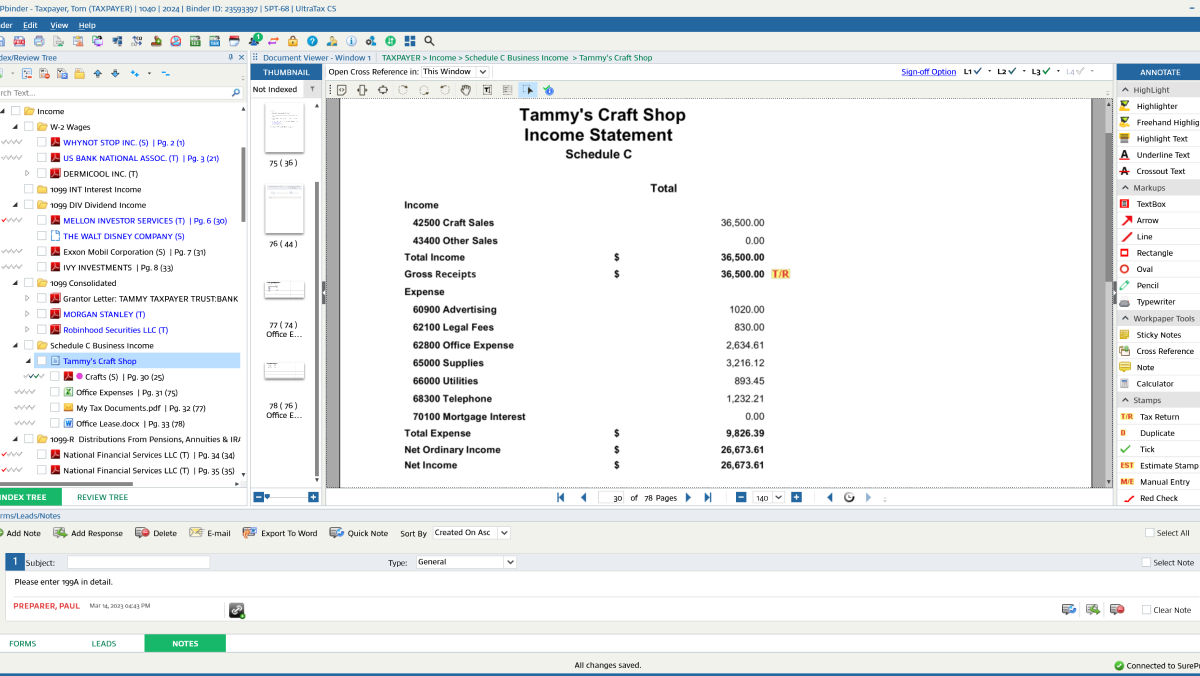
1. SPbinder gives reviewers workpapers they can follow
Thomson Reuters SPbinder gives preparers the tools to assemble thoroughly annotated, cross-referenced workpapers, which makes review easier and faster. Collaboration tools keep questions, answers, and sign-offs in one place, so a manager doesn’t reopen the file to hunt for context.
Better workpapers shorten the first pass and reduce the rework loop. reopen the file to hunt for context. Better workpapers shorten the first pass and reduce the rework loop.
2. UltraTax CS makes issues visible and review easier to navigate
Thomson Reuters UltraTax CS flags issues through diagnostics, so preparers fix errors before a return reaches the queue. Its intuitive interface lets reviewers move from a flagged item to the underlying data without searching.
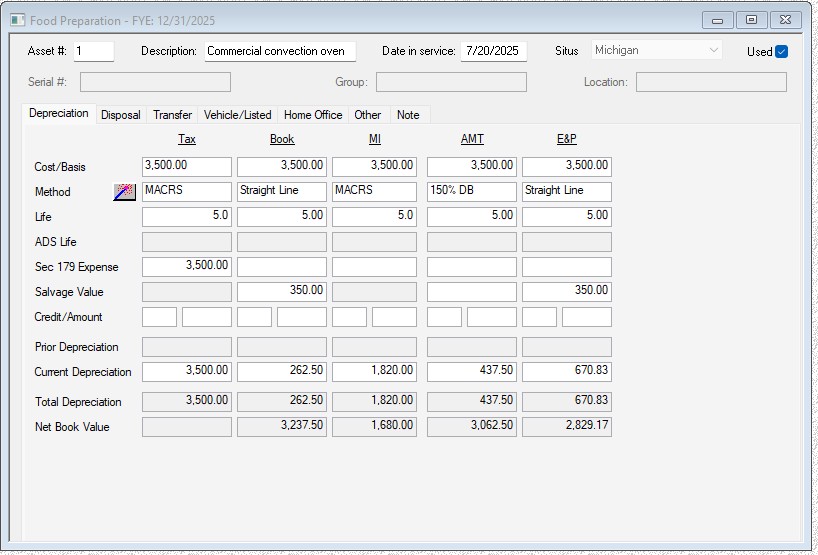
In a Forrester Total Economic Impact study commissioned by Thomson Reuters, interviewees reported the tax return review process was 50% faster on average due to UltraTax CS.
3. SurePrep and Ready to Review turn preparers into first-level reviewers
Thomson Reuters 1040SCAN reduces prep time by automating data entry and workpaper indexing for over 40 IRS forms along with State K-1s, Federal Organizer pages, grantor letters, margin interest, and investment fees.
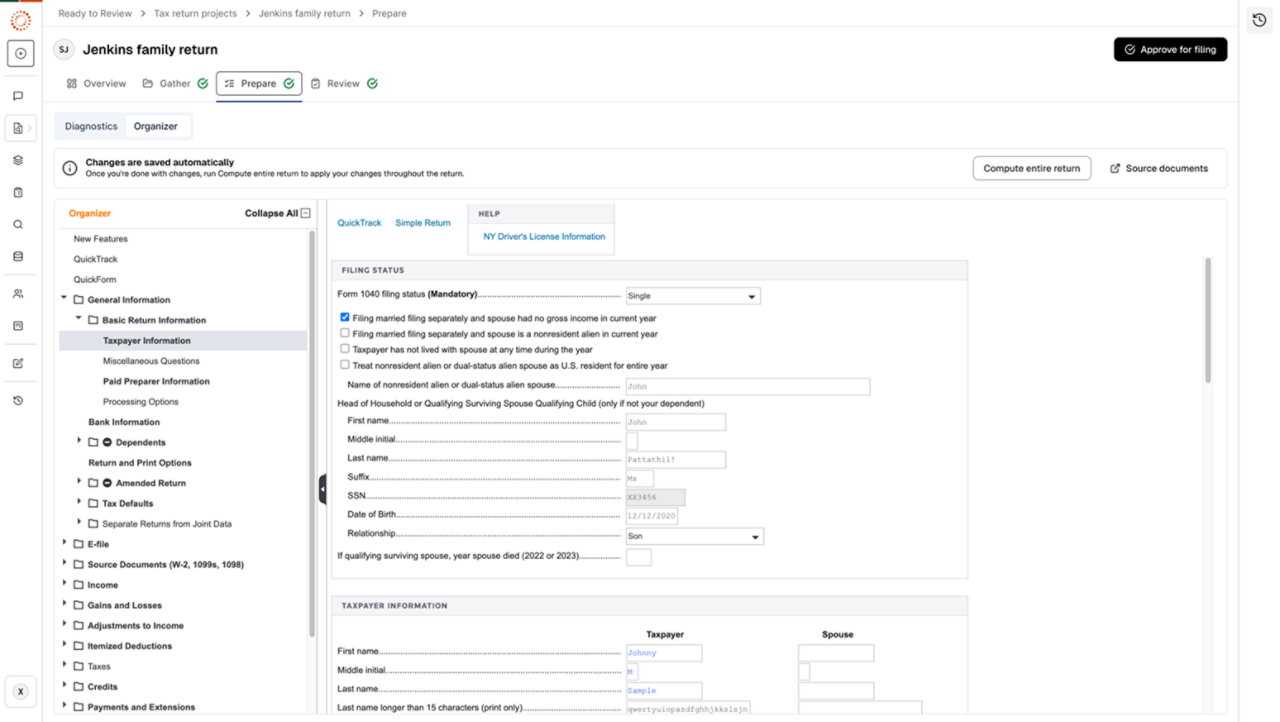
Thomson Reuters Ready to Review takes automation even further, using AI agents to process source documents and prior-year returns, extract and categorize data, and generate returns ready for professional review on simple 1040s. Early adopters saw up to 70% faster preparation and workpaper review.
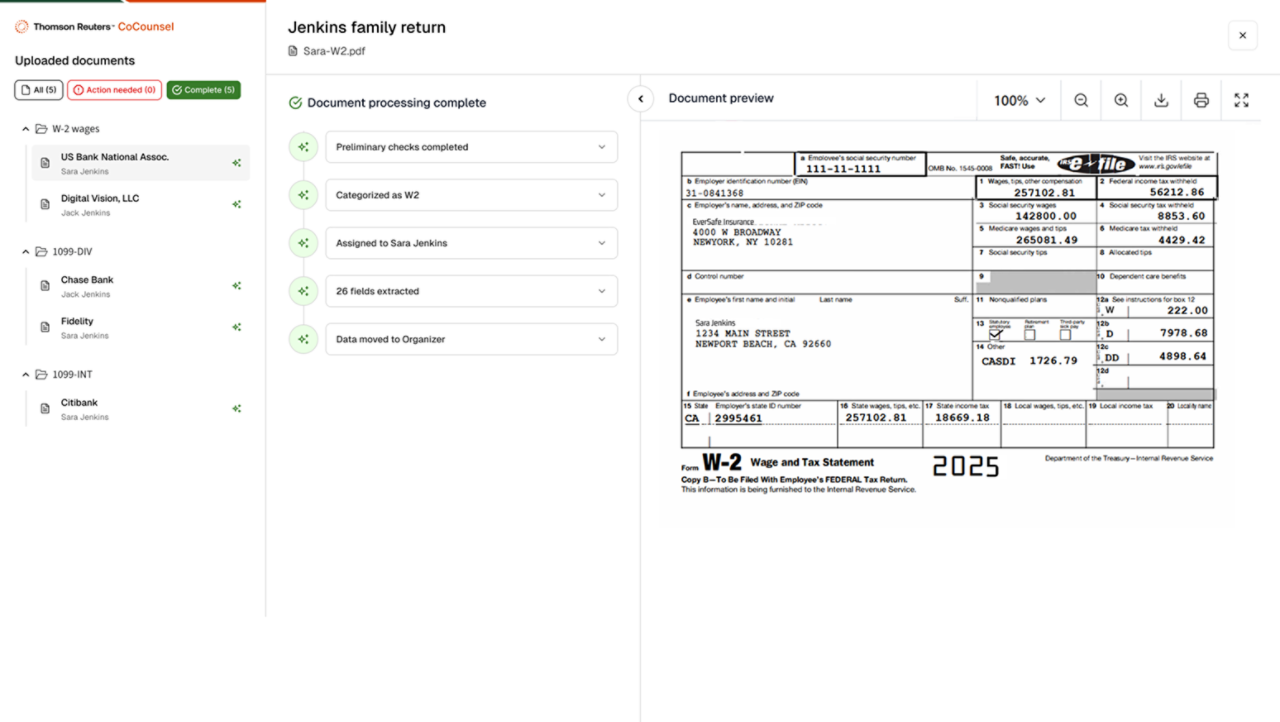
When automation handles data entry, preparers can check their own returns the way a lower-level reviewer would: tie out figures, clear diagnostics, and resolve questions before submitting.

Your workflow shouldn't work against you
Thomson Reuters delivers the complete solution: a purpose-built, integrated suite that transforms every step of the tax workflow — from document gathering through final delivery — with seamless, end-to-end automation.
Explore solutions ↗Example of a tax return review model built on this approach
- Preparer self-review: Diagnostics are cleared and workpapers are tied out
- First-level review: A preparer or senior staff member checks AI tax return review flags against the binder
- Manager review: The manager focuses on exceptions, judgment areas, and client-specific issues
- Partner sign-off: Partners see only high-risk or high-complexity returns
This structure moves routine checks to lower-cost staff and reserves senior time for decisions only seniors can make.
See what faster tax return review really looks like
Faster prep alone leaves the tax review bottleneck in place. Shortening the tax return review process takes better workpapers, earlier error checks, and AI tax return review for the first pass.
Thomson Reuters builds all three into the workflow, so returns wait less and senior staff spend their time on judgment. Explore our tax automation suite to see how, or request a free, no-commitment Ready to Review demo to see how much first-level review your preparers could take on.
Want to see what agentic AI tax prep really looks like?
Book a demo to see how Ready to Review prepares, calculates, and resolves diagnostics so your team can focus on review.
Request free demo ↗